




Should You Buy an Electric Car in South Africa? 8 Questions to Ask First
28 August 2026
Considering an electric car in South Africa? Ask these eight practical questions about charging, range, costs, support and daily use.

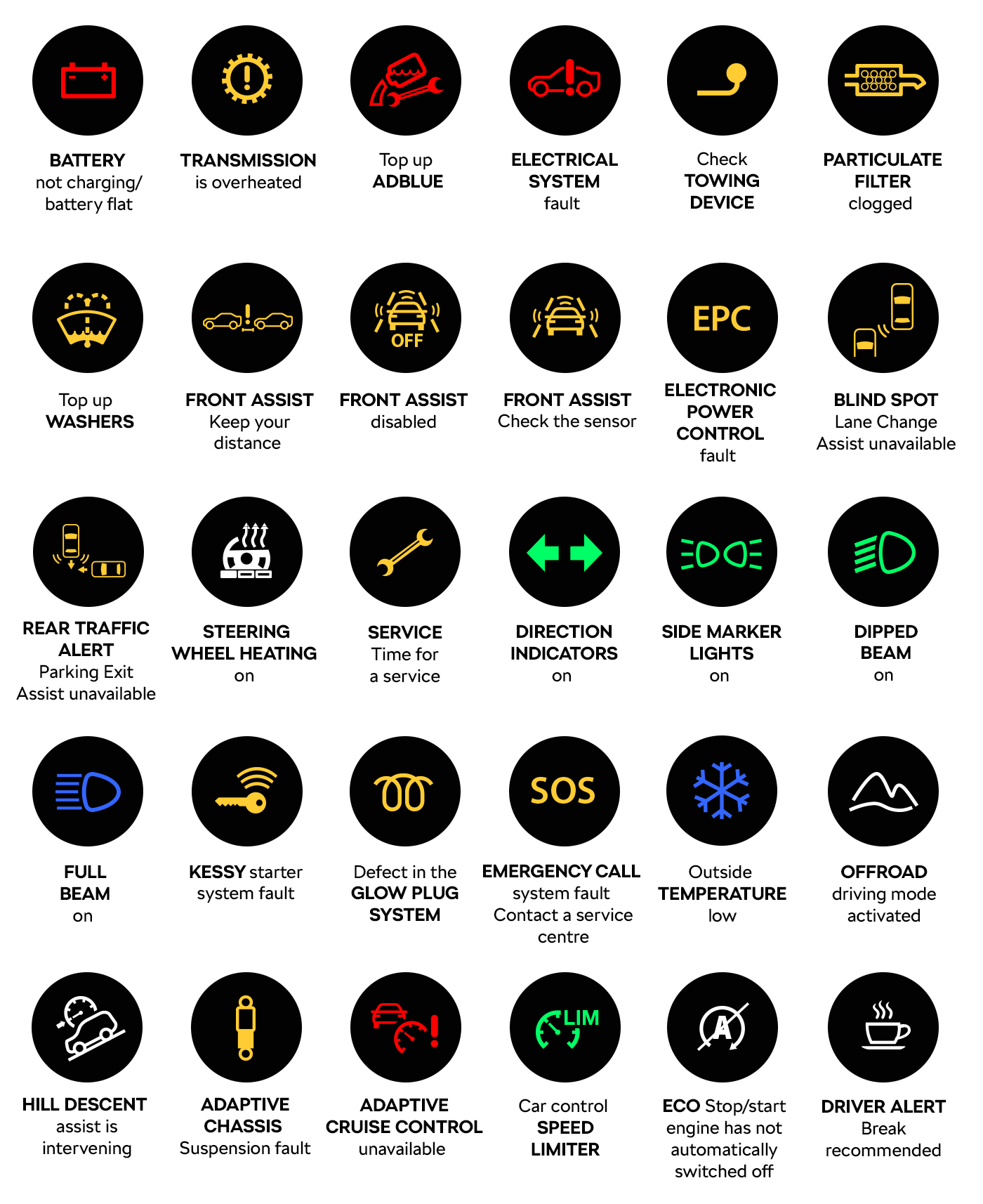
A dashboard warning light is a message about attention, not a decoration. Colour gives you a useful first clue, but the symbol, flashing pattern and owner’s manual determine the correct action.
Red commonly indicates a condition that may require immediate attention, such as low oil pressure, overheating, brake-system trouble or a charging-system fault. Safely stop as soon as possible, switch off the engine if the manual instructs you to do so, and seek help if the light remains on or flashes.
Do not open a hot cooling system. Do not continue driving simply because the car still feels normal. Some serious faults develop faster than a driver can feel them.
Amber often indicates a system that needs checking, such as engine management, ABS, tyre-pressure monitoring, traction control or a service reminder. The car may remain driveable, but that does not mean the fault is harmless. Read the manual and arrange a diagnostic check, especially if the light flashes, the vehicle loses power or braking/steering behaviour changes.
Green and blue indicators commonly show that a function is active, such as headlights, cruise control or a temperature-related system. They are usually informational, but the exact meaning varies by vehicle.
Resetting a light without fixing the underlying fault only hides information. A tyre-pressure light may need correct pressures and a relearn procedure; an engine light may need diagnostic testing; an airbag or ABS light needs professional attention. Do not remove bulbs, disconnect systems or use a cheap reset as a substitute for diagnosis.
Stop driving and request assistance for overheating, low oil-pressure warnings, brake warnings, charging failure with worsening electrical symptoms, smoke, fuel smell, severe loss of power or any change in steering or braking.
Looking for a vehicle with transparent checks and support? Visit the Motordeal Premium showroom or contact our team.
Follow @motordeal_premium and @motordealpremium on Instagram and join our automotive discussions on Facebook.
Information checked: 27 August 2026. Further reading: Arrive Alive vehicle-safety guidance. Warning symbols vary by manufacturer; consult the exact vehicle manual.