Is Your Car Roadworthy? A 10-Minute South African Safety Check
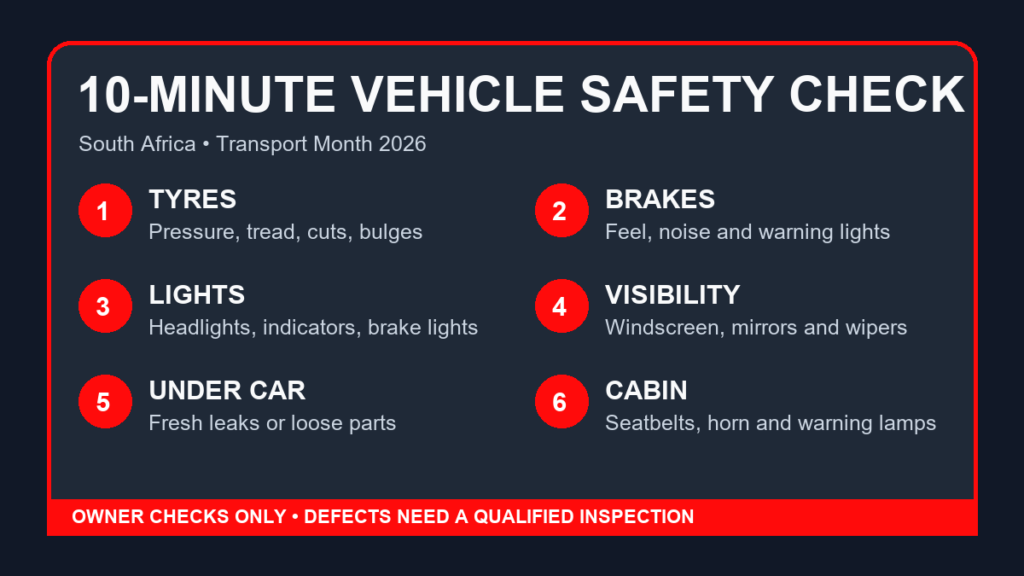
A car can feel normal and still have a safety defect. Before a long trip—or whenever you notice a new noise, warning light or change in handling—take ten minutes to inspect the tyres, brakes, lights, visibility, seatbelts and the ground beneath the vehicle. If anything is damaged, leaking or unsafe, arrange a qualified inspection.
Information checked: 19 October 2026. Owner-level safety guidance only; your vehicle handbook and a qualified technician take priority.
Follow @motordeal_premium and @motordealpremium for practical South African motoring advice.
Why check your vehicle now?
October is Transport Month in South Africa. Gauteng authorities reported intensified roadside operations in October 2026, including checks of tyres, braking systems, lights, windscreens and vehicle documentation. Your own check is not about beating an inspection; it is about finding obvious defects before they contribute to a breakdown or crash.
Your 10-minute vehicle safety check
1. Walk around before moving
Look for a leaning corner, visibly soft tyre, broken light lens, hanging trim, fresh fluid beneath the car or anything lodged near a wheel. Clear water after air-conditioner use can be normal; coloured, oily or strongly smelling fluid needs investigation.
2. Inspect all four tyres
- Check cold pressure against the vehicle placard or handbook.
- Look for cuts, bulges, exposed cords, cracking and uneven wear.
- Inspect the spare and confirm the jack, wheel tool and locking-wheel-nut key are present.
Warning: do not drive on a bulged tyre, exposed cords or a tyre losing pressure rapidly. Have it assessed by a reputable tyre specialist.
3. Test every light
Check dipped and main beams, indicators, hazards, brake lights, tail lights and number-plate illumination. Ask another person to observe, or use a safe reflection from a wall. Replace failed bulbs only where the handbook permits owner replacement.
4. Check visibility
Clean the windscreen, mirrors and lights. Confirm the wipers clear water without severe smearing and washer fluid reaches the screen. A crack affecting the driver’s view needs professional assessment.
5. Pay attention to braking
Before entering traffic, notice whether the pedal feels unusually soft, sinks, pulses strongly or needs more travel than normal. Grinding, pulling, a red brake warning, visible fluid loss or sharply reduced braking ability means the vehicle should not be driven until inspected.
6. Check seatbelts and warning lamps
Each occupied seat needs a belt that latches and retracts correctly. Start the vehicle and observe its normal self-check. Warning lamps should behave as the handbook describes. Never bypass or cover airbag, ABS or brake warnings.
7. Listen during the first slow metres
In a safe area, move off slowly and listen for scraping, knocking or a new rotational noise. Stop if steering, braking or stability feels abnormal. Never test a suspected fault at road speed.
Documents are part of readiness
Keep the vehicle licence disc current and number plates fitted and legible. Drivers should carry a valid driving licence. If legal roadworthiness is uncertain or a defect has been identified, use an authorised testing station or qualified repair facility rather than guessing.
What owners should not repair themselves
Airbags, ABS, seatbelt pretensioners, steering, structural damage, brake hydraulics, high-voltage hybrid or EV systems and immobilisers are technician work. Do not disconnect, bridge, code out or defeat safety or security systems.
Preparing to buy or sell?
A roadworthy certificate does not replace a detailed mechanical inspection or guarantee future condition. Before buying, inspect the vehicle independently and budget for tyres, brakes and servicing. Browse our showroom, review finance options, request a trade-in, or contact us.
Sources
- Gauteng Provincial Government: Transport Month vehicle-fitness checks, 12 October 2026
- Arrive Alive: Vehicle roadworthiness and safety
- AA South Africa: Tyres are critical safety features
Follow the Motordeal Premium Facebook page and share this checklist before the next family trip.