Car Fire While Driving: What South Africans Must Do
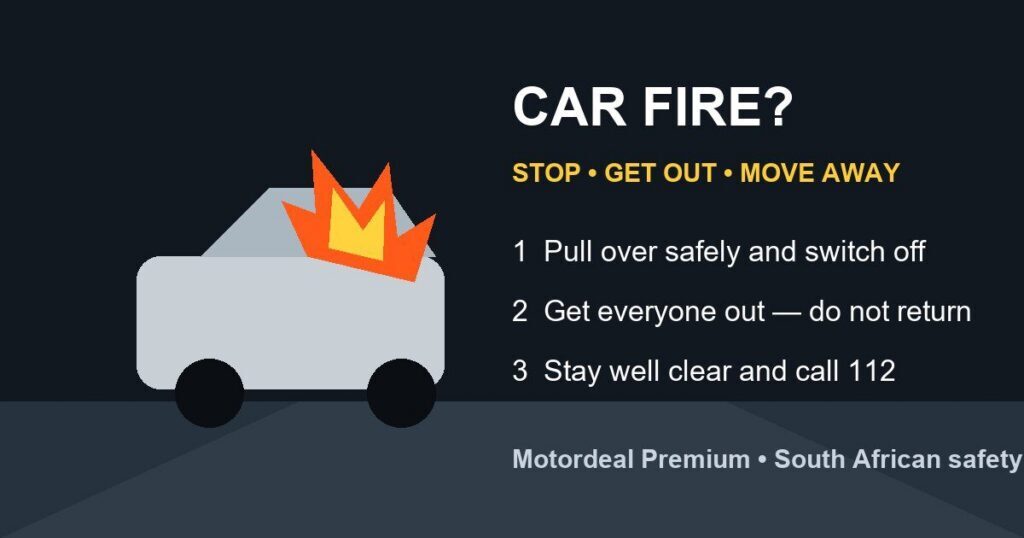
If your car starts smoking or burning while moving, pull over safely, switch it off, get everyone out and move well away. Do not return for belongings or open the bonnet. Call emergency services from a safe place.
Information checked: 4 November 2026. Safety guide by the Motordeal Premium Editorial Desk.
What to do if your car catches fire
- Signal and stop safely. Leave the traffic lane if possible. Avoid people, buildings, dry grass, fuel pumps and other vehicles.
- Switch off. Once stationary, select Park or neutral, apply the parking brake and turn off the ignition.
- Get everyone out. Help children and passengers, but leave property behind if retrieving it costs time.
- Move well away. Aim for at least about 30 metres and farther if smoke, wind, leaking fuel or traffic creates danger. Stand behind a barrier and upwind where possible.
- Call 112 from a cellphone. Give your number, exact road and direction, a landmark, injuries, trapped occupants and whether the vehicle is petrol, diesel, hybrid or electric if known.
- Do not return. Fire can flare up; tyres, airbags, fuel containers and batteries can create extra hazards.
Should you use a fire extinguisher?
Escape is the priority. Do not remain beside visible flames, heavy smoke, leaking fuel, fire below the vehicle or a suspected high-voltage battery fire. A small automotive extinguisher is only for the earliest stage when everyone is out, you have the correct unit and training, and your escape route is clear. If one brief attempt does not control it, retreat.
Do not open the bonnet
Opening the bonnet can feed the fire with oxygen and cause a flare-up while placing your face and hands over it. Tell emergency responders where smoke first appeared.
Petrol, diesel, hybrid and electric cars
The first safety response is the same: stop, switch off, evacuate, create distance and call for help. Never touch orange high-voltage cables or damaged battery parts. A damaged lithium-ion battery can retain energy and may reignite, so EVs and hybrids need trained emergency and recovery personnel.
Warning signs
- A strong smell of fuel, melting plastic or insulation.
- Smoke from the bonnet, dashboard, wheel, underbody or charging area.
- Flickering electrics, repeated blown fuses or hot switches.
- Fuel or oil leaking onto hot components.
- Battery-temperature warnings in a hybrid or EV.
Stop safely if these signs appear. Do not drive on to see whether they clear; arrange professional recovery and diagnosis.
Reduce the risk
- Repair fuel, oil and electrical leaks promptly.
- Never fit unfused wiring, counterfeit chargers or improvised battery connections.
- Use a competent automotive electrician for accessories.
- Follow the manufacturer charging instructions for an EV or plug-in hybrid.
- Check your VIN for recalls through the manufacturer or authorised dealer.
After the fire
Do not touch the vehicle or debris until responders declare the scene safe. Contact your insurer and arrange specialised recovery. Tell the operator if it is electric or hybrid, has been submerged, or has battery or underbody damage. Never attempt to restart it.
Looking for a replacement? Browse our showroom, review finance options, request a trade-in assessment, or contact us. Follow Instagram @motordeal_premium and @motordealpremium.
Sources
- US Fire Administration: Vehicle Fire Safety
- NFPA: electric-vehicle safety
- Western Cape Government: emergency numbers
- SAPS: emergency numbers
Save this guide, share it with another driver and follow the Motordeal Premium Facebook page.
Quick questions
What number should I call?
Call 112 from a South African cellphone and give your exact location first.
Can I open the bonnet?
No. It can feed the fire with oxygen and expose you to a flare-up.
Can an electric car reignite?
A damaged high-voltage battery may retain energy and reignite. Keep away and use trained responders.