Vehicle Recall Scam in South Africa: 7 Checks
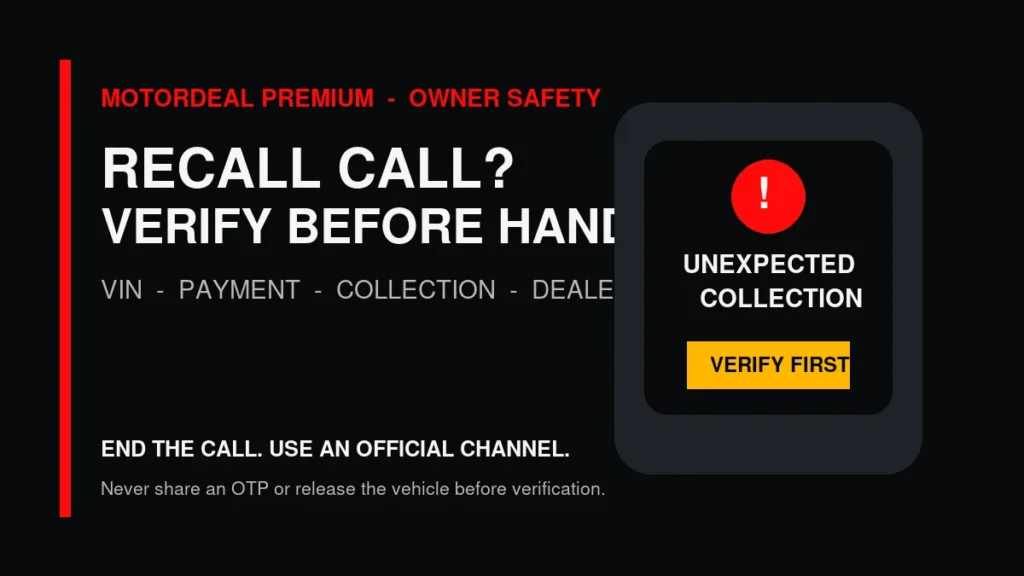
A genuine vehicle recall should be verified through the manufacturer’s official South African website, customer-care number or an authorised dealer—not through the caller, link or collection service that contacted you. Chery South Africa is currently warning owners about scammers who claim a recall is underway, offer to collect the vehicle and tell owners not to use their nearest dealership.
Information checked: 22 November 2026. This guide responds to Chery South Africa’s current scam alert and applies broadly to unexpected vehicle-recall messages.
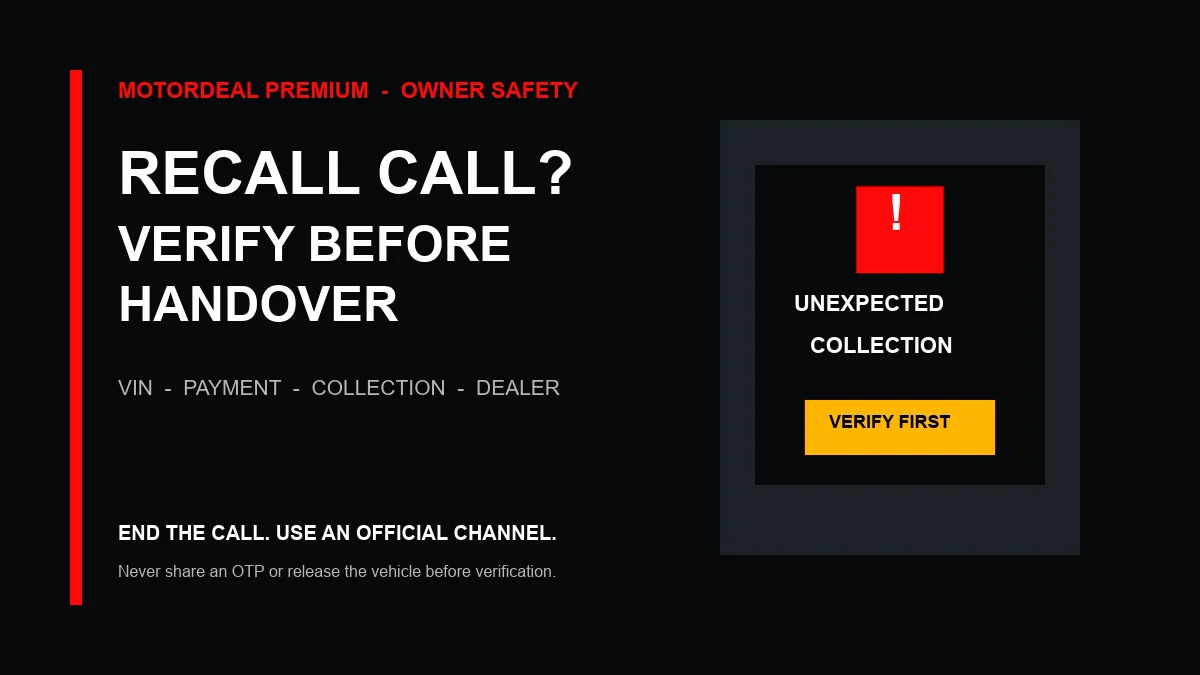
How the fake recall approach works
Chery says owners have been contacted by email, telephone and SMS by people claiming to represent a recall campaign. The warning says the callers may try to persuade an owner to let them collect the vehicle for repairs and may claim that only selected outlets—not the owner’s nearest Chery dealership—can perform the work.
A separate Chery fraud notice warns that impersonators may seek personal information, financial details and vehicle details including the VIN. A real recall may legitimately require a VIN check, but that does not make an unsolicited caller or link trustworthy.
Seven checks before you hand over the car or any information
1. End the call and verify independently
Do not use the phone number, link or email address supplied in the unexpected message. Find the manufacturer’s South African website yourself, use the customer-care details in the owner manual, or call an authorised dealer whose details you already trust.
2. Check the VIN only on an official channel
Recall eligibility is normally determined by the 17-character vehicle identification number. Enter it only on the manufacturer’s verified website or give it directly to an authorised dealer or official customer-care team. Do not publish the full VIN on social media.
3. Be suspicious of an unsolicited collection
Pause if a stranger wants to collect the vehicle, especially when they discourage you from contacting your normal dealer. Ask the manufacturer or authorised dealer to confirm in writing whether collection or towing is required, who will perform it and how the driver will be identified.
4. Do not pay for the recall remedy
Official safety-recall inspection and corrective work for an included vehicle are normally completed at no cost to the owner. Treat requests for a deposit, release fee, transport payment, card details, banking password, PIN or one-time password as a major warning sign. Separate unrelated maintenance you approve from the recall work.
5. Verify the dealer—not only the person’s story
Search for the outlet on the manufacturer’s official dealer locator and call the published switchboard. Do not rely on caller ID, a WhatsApp logo, a polished email signature or a photo of an employee card. Impersonation can look convincing.
6. Ask for the campaign details
A legitimate representative should be able to identify the model, campaign or defect, explain the authorised process and confirm whether the vehicle may be driven. Compare that information with the manufacturer’s website and the National Consumer Commission’s product-recall notices.
7. Keep a written record
Save the suspicious message, phone number, email headers, requested payment details and the time of contact. Do not continue engaging simply to gather more information. If the contact is genuine, keep the dealer booking and final job card showing the VIN and completed campaign.
What a legitimate recall process usually looks like
- The manufacturer, authorised dealer or regulator publishes or communicates a defined safety campaign.
- Your VIN is checked privately against the manufacturer’s campaign records.
- An authorised dealer confirms the required inspection or repair and whether the vehicle may be driven.
- The approved recall remedy is performed without charging you for that campaign work.
- You receive a job card or completion record for the vehicle history.
Procedures can differ by campaign. Some safety risks may require towing or urgent parking instructions, but those directions should be independently confirmed through an official channel.
If someone has already collected your car
Contact the manufacturer and your authorised dealer immediately to establish whether the collection was legitimate. If it was not, report the vehicle and circumstances to the South African Police Service and notify your insurer or tracking company. Do not confront the suspected collector yourself.
If you shared banking details, an OTP or made a payment
Contact your bank’s fraud line immediately using the number in the banking app, on the back of the card or on the bank’s official website. SABRIC’s guidance is to end suspicious interactions, verify through official channels and report suspicious activity promptly. Never approve a transaction you did not initiate or move money to a so-called safe account.
If you shared your VIN or personal information
Tell the manufacturer what was disclosed and ask it to note the incident. Be alert for follow-up calls that use the information to sound more convincing. Change any compromised account passwords and do not share subsequent verification codes. A VIN is visible on vehicles and documents, but it should still be handled carefully when linked to your identity and contact details.
Current Chery owner warning
Chery South Africa’s official Family Care page currently includes a scam alert and an official VIN checker for active campaigns. It directs owners to verify suspicious communications with their dealership or Chery Customer Care. Omoda South Africa also provides an official Active Care VIN checker for affected C5 vehicles.
If you own a Chery Tiggo 4, Tiggo 8 Pro Max 2.0 or Omoda C5, read our South African Chery and Omoda recall guide. For the general process, use our vehicle recall owner checklist.
Quick rule to remember
Unexpected contact may alert you to a real recall, but it must not be the channel that proves itself genuine. Stop, find the official manufacturer or dealer contact independently, and verify before sharing information, paying money or releasing the vehicle.
Sources
- Chery South Africa Family Care: recall VIN checker and scam alert
- Chery South Africa: Fraudulent Misrepresentation & Ongoing Scams
- National Consumer Commission: Chery and Omoda recall notice, 10 November 2026
- Omoda South Africa Active Care VIN checker
- SABRIC: verify before trusting and report suspicious activity