Cross-Border Car Documents South Africa: Checklist
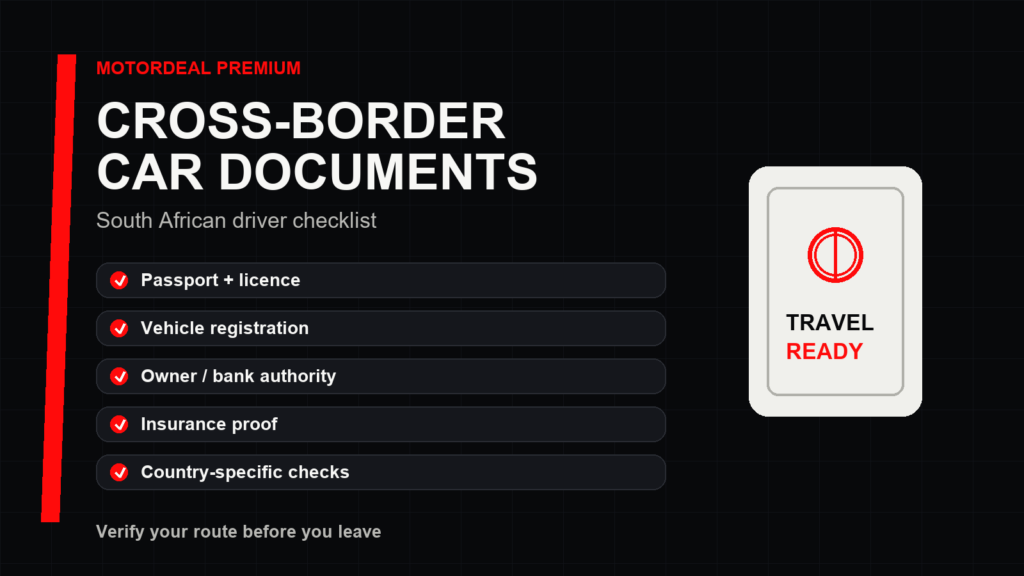
Answer first: Before driving from South Africa into a neighbouring country, carry your valid passport and driver’s licence, proof of vehicle insurance, vehicle registration papers, and any required authority letter from the registered owner, bank or rental company. Check the destination country’s current entry, road-tax, insurance and equipment rules before you leave. Do not rely on photographs stored only on your phone.
Information checked: 23 November 2026. Border and immigration requirements can change. Confirm the rules with the official border, customs and destination-country authorities for your route before departure.
The documents to prepare before a cross-border road trip
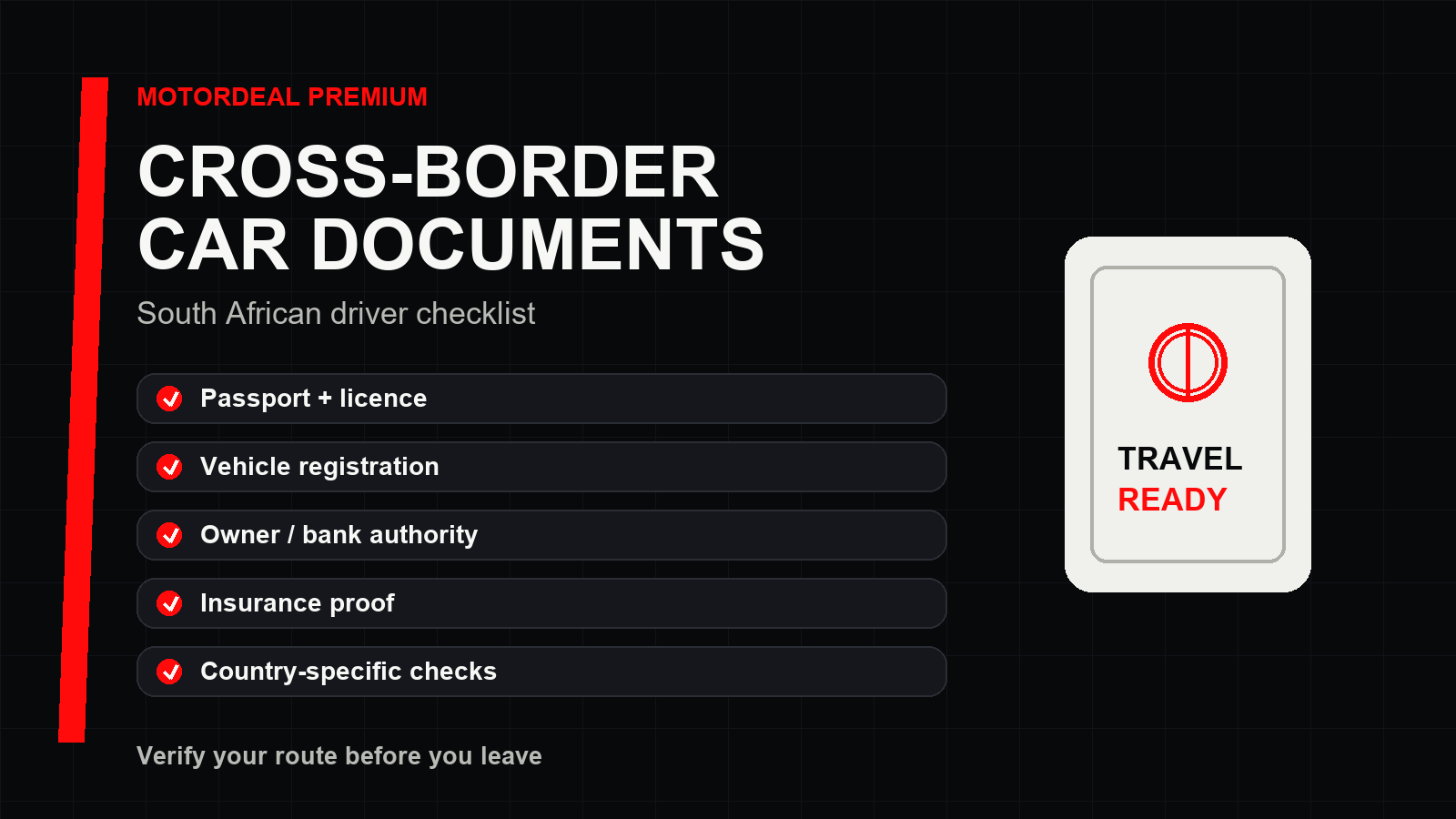
Cross-border paperwork depends on who owns the vehicle and which countries you will enter. The Border Management Authority advises drivers travelling into or out of South Africa to carry their driver’s licence, proof of insurance and vehicle documentation. Build one physical travel file with the following items:
- Valid passport for every traveller: check validity, blank-page and visa requirements for each country on the route.
- Valid driver’s licence: carry the original licence. Check whether the destination recommends or requires an International Driving Permit for your licence type.
- Vehicle registration papers: carry the original or the certified copy accepted for your route. The details must match the vehicle and registered owner.
- Proof of insurance: ask your insurer for written confirmation of the countries, dates and type of cover that apply.
- Authority letter when you are not the registered owner: get written permission from the registered owner to take the vehicle across the border.
- Bank authority for a financed vehicle: obtain a dated cross-border letter from the financial institution or title holder and carry the vehicle licence or registration papers it specifies.
- Rental-company permission: the rental agreement alone may not be enough. Request written approval naming the countries you may visit.
Print the documents and keep a protected backup separately. A flat battery, stolen phone, weak signal or damaged screen should not prevent you from proving ownership and authority.
If the car is financed
A financed vehicle normally has a bank or finance house as the title holder. The BMA says the bank’s authority letter should include the travel dates and accompany the vehicle licence papers. Request it early rather than on the day before departure.
Check that the letter correctly records the registration number, vehicle details, driver or account holder, countries and travel period. If a trailer or caravan is separately financed or registered, prepare its documents too.
Do not assume that an instalment agreement or monthly statement replaces formal cross-border permission. Ask the finance provider exactly which document it issues for international travel.
If the car belongs to someone else
The BMA requires authority from the registered owner when the driver is not the owner. The letter should clearly identify the vehicle, owner, authorised driver, destination countries and travel dates. Ask the relevant border authority whether the letter must be certified, commissioned or supported by an affidavit.
This applies to a family member’s car, a company vehicle and, in a different form, a rental vehicle. Also check whether the insurer requires the authorised driver to be named on the policy or cross-border confirmation.
Insurance: ask what happens after the border
“Covered outside South Africa” is not a complete answer. Ask your insurer in writing:
- Which countries are covered?
- Does the policy cover accidental damage, theft, fire and third-party liability there?
- Is country-specific third-party insurance still required at the border?
- Who pays for towing or recovery to the South African border?
- Does roadside assistance operate in the countries and remote areas on your route?
- Are off-road use, business use or an extended stay excluded?
- Which number must you call after an accident or theft?
Carry the policy or confirmation letter and the insurer’s international contact details. If an incident occurs, follow local police-reporting rules and contact the insurer promptly.
Do you need a Carnet de Passages?
A Carnet de Passages en Douane is an international customs document used for the temporary admission of vehicles in participating countries. It is not automatically required for every private trip from South Africa into a neighbouring country.
The AA advises motorists to check the requirements for every destination and transit country. A carnet may become relevant for particular countries, shipping arrangements or longer overland journeys. Confirm the requirement with the AA, SARS and the destination customs authority rather than buying or skipping one based on an old travel forum.
Check country-specific fees, stickers and safety equipment
Vehicle documents are only one part of the crossing. The country you enter may have its own road levy, third-party insurance, temporary import, toll, carbon-tax, identification-sticker or safety-equipment rules. Requirements can also differ for trailers.
Before leaving, check the official pages for:
- border-post operating hours and holiday extensions;
- online declarations or temporary-import processes;
- road, vehicle and insurance fees and how they may be paid;
- reflective triangles, vests or other compulsory equipment;
- food, agricultural-product and valuable-goods declarations;
- passport, visa and child-travel documents for every occupant.
Use official government or border-authority information for the final check. Rules copied between blogs can be outdated or apply to a different nationality, vehicle type or border post.
Seven checks before you join the border queue
- Match the details: confirm names, registration number, VIN and dates across the documents.
- Check expiry dates: passport, licence, vehicle licence, insurance and authority letters must remain valid for the full trip.
- Print the file: carry the originals and certified copies required for your route.
- Protect your identity: do not post full VIN, passport or registration documents publicly.
- Save official contacts: insurer, roadside assistance, finance provider, rental company and destination emergency numbers.
- Prepare the vehicle: check tyres, spare or mobility kit, fluids, lights, brakes and the manufacturer’s loaded tyre pressures.
- Recheck the border: verify operating hours and alerts on the day of travel.
For the vehicle itself, use our guides to packing your car safely, checking the spare tyre and tools, and recognising drowsy-driving warning signs.
Common mistakes that can delay a trip
- Requesting a bank or rental letter too late.
- Carrying a registration copy that does not match the current owner or vehicle.
- Assuming South African comprehensive insurance covers every country and recovery cost.
- Leaving the trailer’s documents at home.
- Using expired advice about fees, operating hours or child-travel documents.
- Keeping every document on one phone with no paper backup.
Sources
- Border Management Authority: Entering and Leaving South Africa
- SARS: Traveller Processing External Policy, effective 1 July 2026
- Automobile Association of South Africa: Travel and Carnet de Passages information
Buying or replacing a vehicle before your next trip? Browse Motordeal Premium’s current vehicles, review vehicle-finance options, or request a trade-in assessment.