Drowsy Driving: Warning Signs and the Safest Response
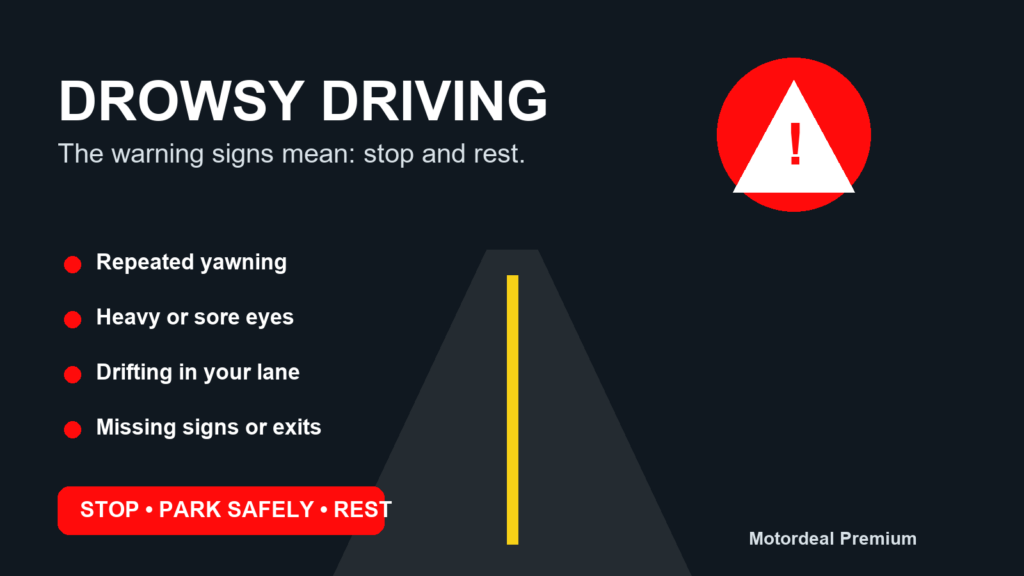
If you are yawning repeatedly, struggling to keep your eyes open, drifting in your lane or missing signs and exits, do not try to push through. Reduce speed smoothly, leave the road at the next genuinely safe place, park securely and rest. Driver fatigue slows reactions, weakens concentration and harms judgement. Coffee, loud music and an open window are not substitutes for sleep.
Information checked: 19 November 2026. This is general road-safety guidance, not medical advice.
What is drowsy driving?
Drowsy driving means operating a vehicle while fatigue or sleepiness is reducing your ability to drive safely. You do not have to be fully asleep for fatigue to become dangerous. Arrive Alive guidance explains that tiredness can reduce reaction time, concentration, vigilance and judgement. Even briefly nodding off can have severe consequences.
South African fatigue-crash totals are difficult to measure precisely because tiredness is often under-reported or recorded under another apparent cause. That uncertainty is not a reason to dismiss the risk; it is a reason to act on the warning signs early.
Seven warning signs that mean you should stop
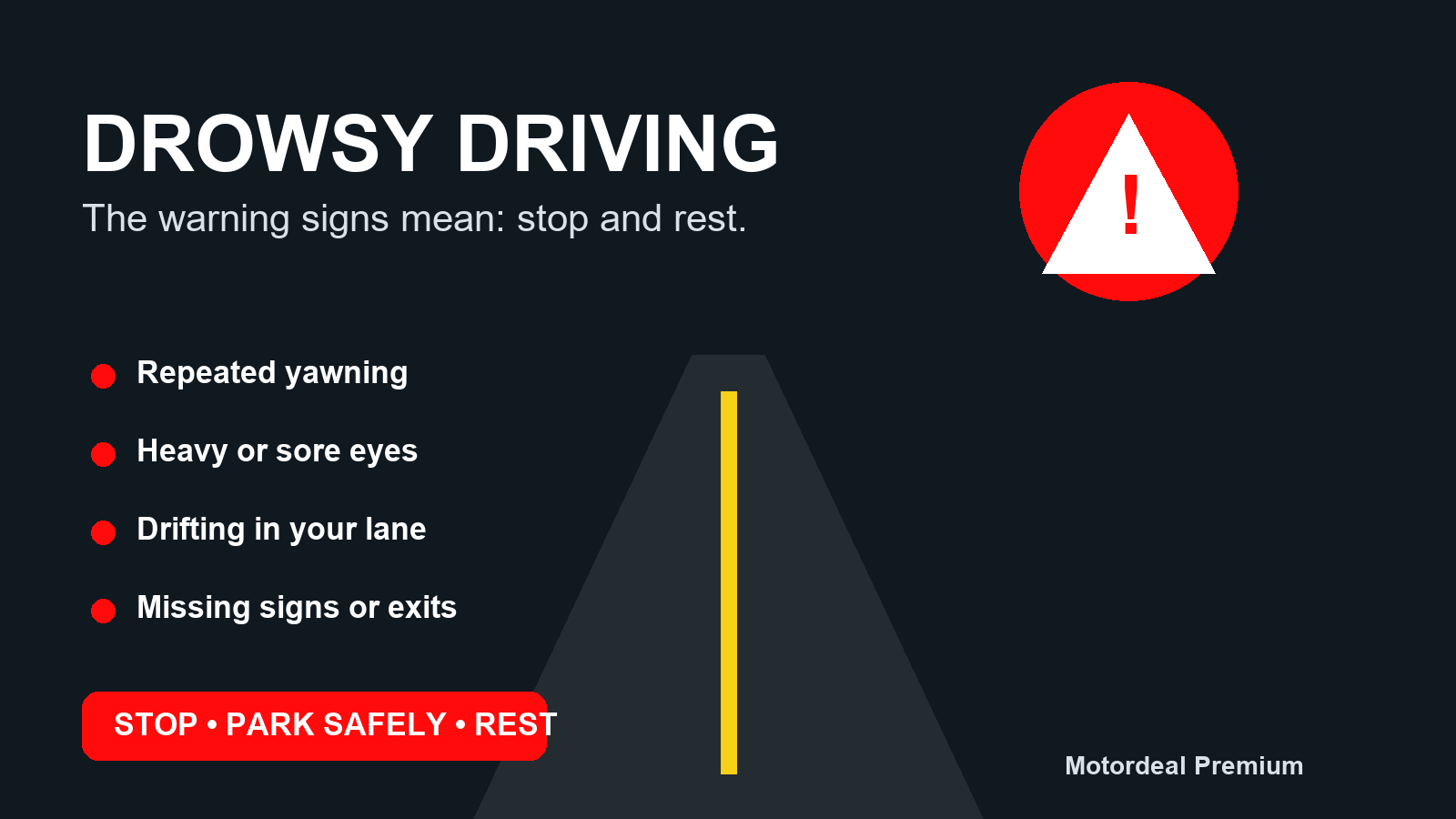
- Repeated yawning or blinking: especially when it becomes difficult to keep your eyes open.
- Heavy, sore or unfocused eyes: road signs may become harder to read promptly.
- Lane drift: touching a rumble strip, wandering towards the shoulder or making frequent steering corrections.
- Missing information: passing an exit, overlooking a sign or not remembering the last few kilometres clearly.
- Inconsistent speed: unintentionally speeding up or slowing down.
- Poor decisions: following too closely, braking late or taking risks you would normally avoid.
- Head nodding or a microsleep: this is an emergency warning. Stop driving as soon as it is safe.
What to do when tiredness hits
1. Admit that the trip must pause
Do not treat fatigue as a test of toughness. Tell your passengers and prioritise reaching a safe stopping place.
2. Slow down smoothly and increase space
Avoid sudden braking or erratic lane changes. Increase your following distance and look for a safe, legal exit such as a staffed filling station, recognised rest area or secure parking facility.
3. Park somewhere secure
Do not stop in a live lane, on a blind bend or on a narrow shoulder unless a genuine emergency leaves no safer option. Choose a well-lit public place away from moving traffic.
4. Rest before continuing
Arrive Alive advises a short power nap if drowsiness develops. Stretching may help comfort, but does not replace sleep. If you remain tired after resting, delay the journey, arrange another driver or find suitable accommodation.
5. Share the driving
Change drivers only when the replacement is licensed, appropriately insured, familiar with the vehicle and fully alert. Make the swap while safely parked.
What does not reliably fix fatigue?
- Opening a window: cool air may feel refreshing briefly, but does not restore alertness.
- Turning up the radio: stimulation can mask sleepiness without correcting it.
- Driving faster: this increases risk while reactions and judgement are already impaired.
- Depending only on coffee or energy drinks: caffeine may provide temporary alertness, but is not a substitute for adequate sleep.
- Trusting driver-assistance technology: attention alerts can support a driver; they cannot make a fatigued person safe to continue.
How to reduce fatigue before a South African road trip
- Sleep properly before departure. Do not plan to catch up while driving.
- Plan a break at least every two hours or 200 km. AA South Africa recommends this practical guideline.
- Avoid an unrealistic overnight schedule. If possible, drive during hours when you are normally awake.
- Allow time for stops. A schedule with no margin encourages poor decisions.
- Check medicine labels. Some medicines cause drowsiness. Ask a pharmacist or doctor if unsure, and never ignore a warning not to drive.
- Avoid alcohol and intoxicating substances. They can compound fatigue.
- Prepare the vehicle. Check tyres, lights, wipers, fluids and air conditioning before a long trip.
Before a holiday drive, browse our showroom or use the contact page if you need help choosing a comfortable long-distance vehicle.
A simple passenger safety rule
Passengers should not pressure a tired driver to continue. Watch for yawning, lane drift, missed turns and unusually quiet or irritable behaviour. Suggest a safe stop early and offer to drive only if legally able and fully alert.
Save this checklist for your next road trip. Follow Motordeal Premium on Instagram at @motordeal_premium and @motordealpremium for practical motoring guidance.
Frequently asked questions
How often should I stop on a long drive?
AA South Africa recommends a break at least every two hours or 200 km. Stop sooner if tired; the interval is a planning guide, not permission to continue while drowsy.
Is a 15-minute nap enough?
Arrive Alive lists a 15-minute power nap as a practical response when drowsiness develops. If sleepiness remains afterwards, do not drive.
Can coffee make me safe to drive?
No drink can guarantee safe alertness. Caffeine may temporarily help some people, but proper sleep and rest remain essential.
Should I stop on the shoulder if I am tired?
Prefer a safe, legal, secure place away from live traffic. A road shoulder creates additional danger. Use it only when an immediate emergency makes continuing more dangerous and no safer option is available.
Sources
- Automobile Association of South Africa long-distance driving tips
- Arrive Alive driver-alertness guidance
Follow our Facebook page. Planning your next vehicle purchase? See our finance information and trade-in service.