5 Brake Warning Signs You Should Never Ignore
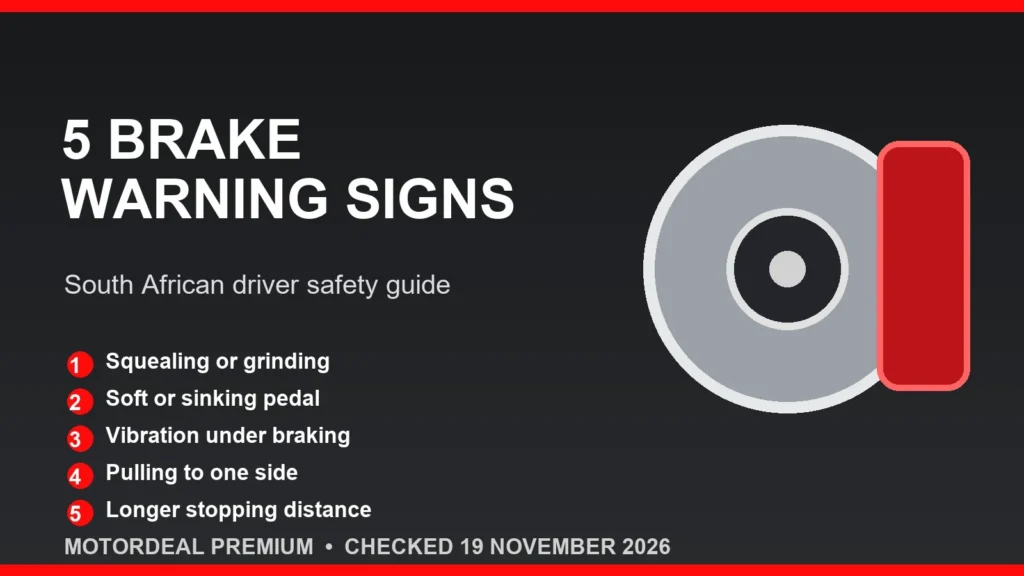
If your brakes squeal, grind, vibrate, feel soft, pull the car sideways or take longer to stop, arrange a professional inspection promptly. A red brake warning light, a pedal that suddenly sinks, visible fluid loss or seriously reduced braking calls for an immediate safe stop and roadside assistance.
Information checked: 19 November 2026. General safety guidance; always follow your vehicle handbook.
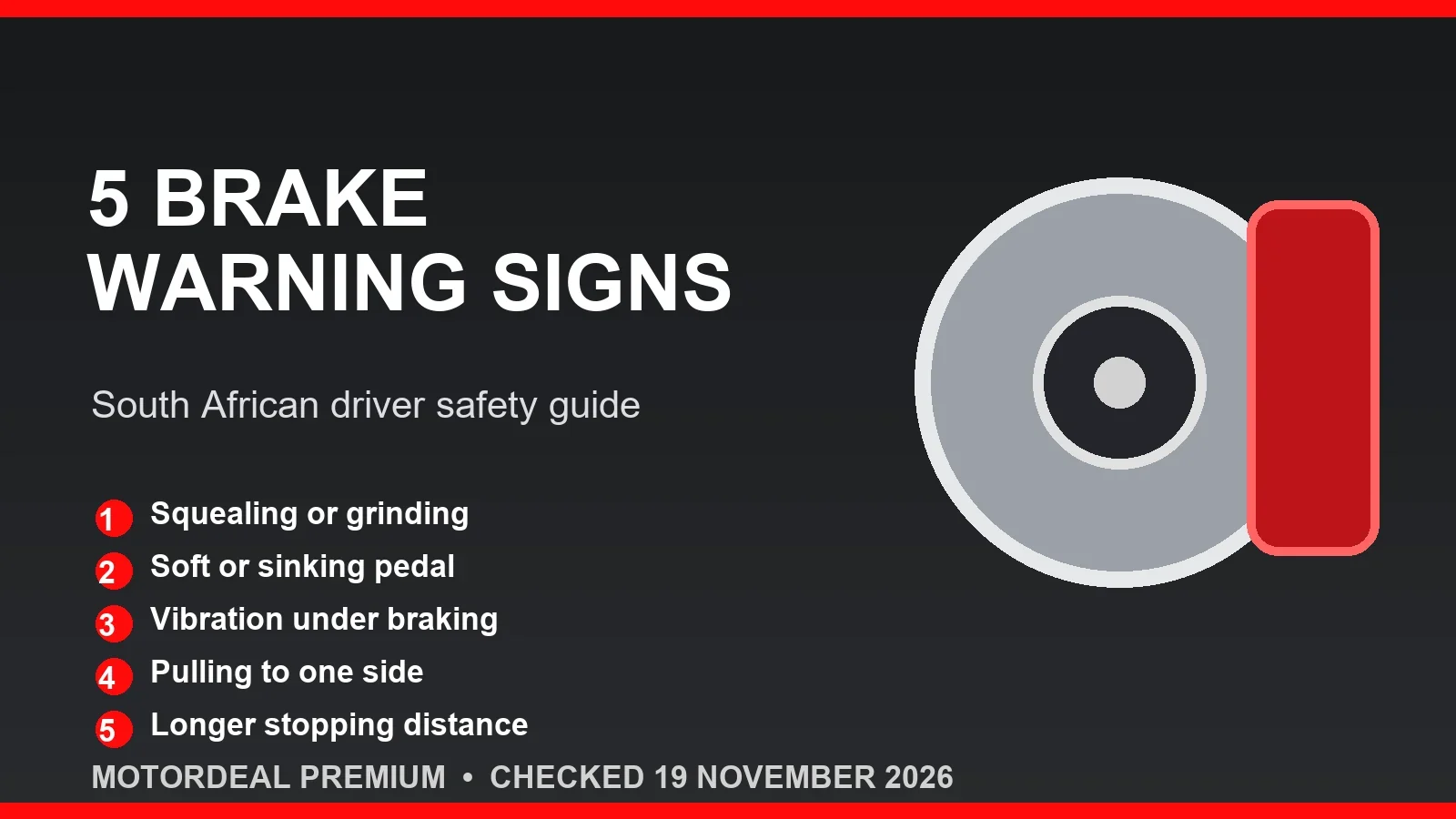
Why brake warning signs deserve fast attention
Your braking system converts movement into heat through friction. Pads, discs or drums, hydraulic fluid, hoses, callipers, sensors and electronic safety systems all have a role. Wear is normal; ignoring changed braking behaviour is not.
In a May 2026 road-safety article, the Vehicle Testing Association warned that worn pads, damaged rotors, deteriorated brake fluid and other faults can increase stopping distance and reduce control. It highlighted squealing, vibration, a soft pedal and increased stopping distance as signs that should not be ignored.
1. Squealing, scraping or grinding
A brief noise after rain or washing can come from light surface rust and may disappear after normal brake applications. Persistent squealing may indicate a pad wear indicator, glazed parts or contamination. Harsh metal-on-metal grinding is more urgent because friction material may be worn away.
What to do: Reduce unnecessary driving and book an inspection. If performance is reduced or grinding is severe, stop using the vehicle and arrange recovery.
2. A soft, spongy or sinking pedal
A softer pedal can point to air or moisture in the hydraulic system, deteriorated fluid, a leak or another hydraulic fault. A pedal that continues sinking under steady pressure is especially concerning.
Warning: Do not pump the pedal and continue a journey as a substitute for diagnosis. If the change is sudden, the warning light is red, fluid appears beneath the car, or braking is weak, stop safely and call roadside assistance. Hydraulic repairs are qualified-technician work.
3. Vibration through the pedal or steering wheel
Pulsation under ordinary braking can be associated with uneven disc thickness, heat damage, deposits, worn suspension parts or wheel-related problems. Do not confuse it with rapid pulsing anti-lock brakes may produce during a genuine emergency stop.
What to do: Note whether vibration occurs only under braking and at which speeds, then tell the workshop. Avoid repeated hard braking until the car is checked.
4. The car pulls to one side
Pulling can result from uneven braking force, a sticking calliper, contaminated friction material, tyre-pressure differences, alignment or suspension faults. Several systems can create a similar symptom, so diagnosis matters.
What to do: Check tyre pressures only when safe and against the manufacturer specification. If the pull is strong or sudden, do not continue at normal road speed.
5. The car takes longer to stop
A longer stopping distance can be caused by worn or overheated brakes, poor tyres, incorrect tyre pressure, a heavy load, wet roads or excessive speed. Brake fade may appear after repeated braking on a long descent and can include a hot smell or changed pedal feel.
What to do: Increase following distance immediately and stop safely if performance has clearly deteriorated. On descents, use an appropriate lower gear to help control speed, but never treat engine braking as a replacement for a faulty service brake.
When should you stop driving immediately?
- A red brake-system warning remains on after the parking brake is released.
- The pedal suddenly sinks, becomes unusually hard or braking power drops.
- You see a suspected brake-fluid leak.
- There is loud grinding together with poor braking.
- The vehicle pulls violently, a wheel appears to lock, or smoke comes from a wheel.
Move out of traffic only if you can do so safely and call professional roadside assistance. Do not crawl to a workshop in a vehicle that cannot stop reliably.
Safe owner checks
- Warning lights: Read the handbook. A red brake warning and amber ABS warning do not mean the same thing.
- Brake-fluid level: Park safely on level ground and inspect the marked reservoir without opening it if visibility is adequate. A low level needs investigation; do not simply keep topping it up.
- Tyres: Check pressure, obvious damage and tread because tyres determine how braking force reaches the road.
- Recent changes: Record noises, smells, pedal feel, speed and weather to help the technician reproduce the symptom.
Do not work beneath a vehicle supported only by its jack. Do not clamp brake hoses, disable ABS sensors, mix unspecified fluids or apply lubricants near friction surfaces. Brake measurement, bleeding and hydraulic or electronic repairs belong with a competent technician.
Questions to ask the workshop
- Which component failed, and what measurement supports the diagnosis?
- Are pads and discs wearing evenly on both sides?
- Does the fluid meet the maker requirements?
- Will ABS or stability-control faults be scanned and cleared only after repair?
- Can I receive an itemised quotation?
If you are comparing a replacement vehicle, browse our current showroom, review the finance process, or request a trade-in assessment. A mechanical inspection remains important when buying any used vehicle.
Brake-warning FAQ
Can I drive with squealing brakes?
Not all squeals mean immediate failure, but persistent noise needs inspection. Stop driving if it comes with grinding, a warning light, pulling, a soft pedal or reduced stopping ability.
Does an ABS warning mean I have no brakes?
Not necessarily. Conventional braking may remain, but anti-lock or stability functions may be unavailable. Follow the handbook and arrange diagnosis promptly. If a red brake warning is also present or braking feels abnormal, stop safely.
How often should brakes be inspected?
Follow the manufacturer service schedule and request an inspection whenever symptoms appear. City traffic, towing, heavy loads, hills and aggressive braking can accelerate wear.
Sources and further reading
- Arrive Alive / Vehicle Testing Association: Brake maintenance and warning signs (18 May 2026).
- Your vehicle owner handbook and manufacturer service schedule for model-specific information.
Found this useful? Follow us on Instagram at @motordeal_premium and @motordealpremium.
Share this guide and follow the Motordeal Premium Facebook page. For help with a showroom vehicle, contact our team.