Car Pulling to One Side? 5 Safe Checks Before a Repair
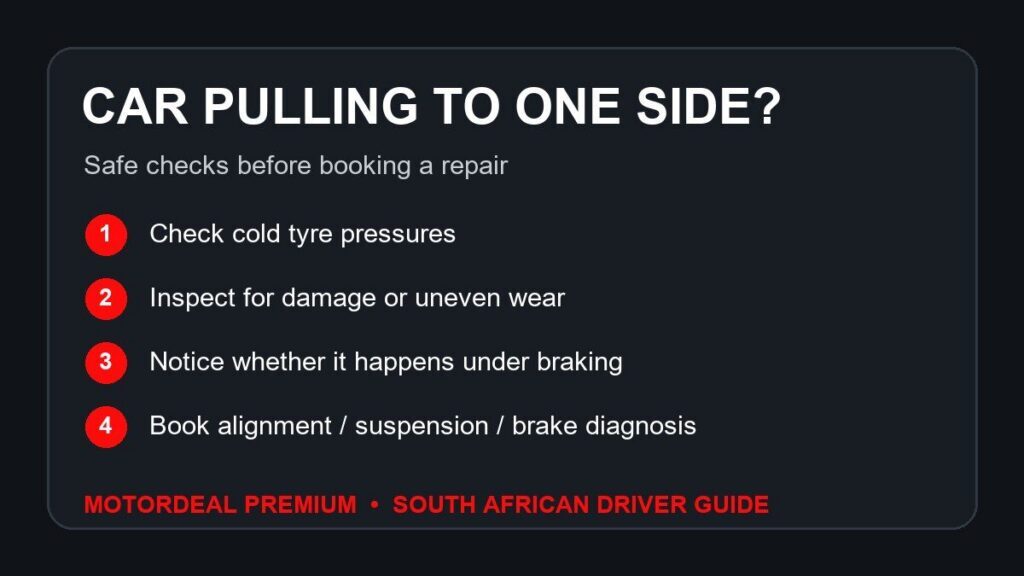
If your car pulls left or right, do not simply hold the steering wheel against it and carry on. First check the tyre pressures and visible tyre condition. If the pull is sudden, severe, follows a pothole impact, or appears when braking, slow down and arrange a professional inspection. The cause may be as simple as unequal tyre pressure, but alignment, suspension, steering, tyre or brake faults are also possible.
What does “pulling to one side” mean?
A pull is a consistent tendency for the vehicle to move left or right on a reasonably level road, requiring steering correction to hold a straight line. A gentle drift caused by road camber is not always a defect, so compare the behaviour on a safe, level stretch rather than deliberately testing on a busy or uneven road.
Safety warning: Do not release the steering wheel to “prove” that the vehicle pulls. Keep both hands in control. If steering feels loose, a tyre is visibly damaged, the car jerks under braking, or the pull began after a hard impact, avoid high speeds and have the vehicle inspected.
Five safe checks you can do
1. Check tyre pressures when the tyres are cold
Compare all four tyres with the manufacturer’s pressure label, usually inside a front door opening, near the fuel flap, or in the owner’s manual. Do not use the maximum pressure moulded into the tyre sidewall as the normal vehicle setting. Unequal pressure across the same axle can affect how the car tracks.
Michelin notes that incorrect pressure can reduce grip, increase braking distance, damage tyres and raise fuel use. The AA also advises motorists to follow the vehicle’s specified pressure and check tyres regularly.
2. Inspect the tread and sidewalls
Look for a visibly soft tyre, nails or screws, cuts, bubbles, separated tread, or one edge wearing faster than the other. A bulge, exposed cord or rapidly losing tyre needs urgent professional attention. Do not try to repair sidewall damage yourself.
3. Remember recent potholes or kerb strikes
A heavy pothole impact or kerb strike can disturb alignment and may damage a tyre, rim or suspension component. If the steering wheel became off-centre immediately afterwards, book an inspection rather than assuming an alignment adjustment alone will solve it.
4. Notice when the pull happens
- All the time: pressure, tyre condition, alignment, steering or suspension may need checking.
- Mainly while braking: a brake fault, tyre grip difference or suspension issue may be involved. Treat a strong braking pull as urgent.
- Mainly while accelerating: drivetrain behaviour, tyre differences or worn suspension parts may contribute.
- Only on one road: road camber, grooves or crosswind may be influencing the car.
5. Compare the steering wheel position
When travelling straight on a safe, level road, note whether the steering wheel sits noticeably off-centre. This can support an alignment diagnosis, but it does not identify the failed part by itself.
When should you stop driving?
Pull over safely and arrange assistance if the vehicle suddenly changes direction, steering becomes heavy or loose, a tyre is losing pressure, you hear grinding or knocking, a wheel becomes unusually hot, warning lights appear, or the car pulls sharply when braking. These signs can indicate a safety-critical fault.
What should a workshop check?
Ask for a diagnosis, not only “an alignment”. A competent technician may need to inspect tyre pressures and condition, wheel and tyre damage, alignment angles, steering joints, suspension bushes, wheel bearings, shock absorbers and brakes. Alignment settings should follow the vehicle manufacturer’s specifications.
The AA explains that correct wheel alignment reduces tyre wear and helps a vehicle travel straight without pulling. It also warns that potholes, debris and high kerbs can damage tyres. If parts are worn or bent, those faults should be corrected before a final alignment.
Can wheel balancing fix a pull?
Usually not by itself. Balancing is primarily used to correct vibration caused by uneven weight around a wheel-and-tyre assembly. Alignment concerns the angles at which the wheels sit and point. A vehicle can need one service, both services, or a different repair entirely.
A practical South African checklist
- Check cold pressures against the vehicle label.
- Inspect all four tyres and rims in good light.
- Do not continue at speed with a bulge, cut, rapid pressure loss or strong braking pull.
- Tell the workshop when the problem began and whether it changes under braking or acceleration.
- Ask for the before-and-after alignment printout where available.
- Recheck the vehicle after the repair and continue monitoring tyre wear.
If you are preparing to replace your car, browse our luxury-value showroom, review vehicle finance options, or request a trade-in assessment.
Sources and information check
Information checked: 14 November 2026.
- Automobile Association of South Africa: tyres, pressure and wheel alignment
- Michelin South Africa: tyre pressure guidance
- Automobile Association of South Africa: post-trip steering, tyre and alignment checks
Have a useful motoring question you want us to explain next? Follow @motordeal_premium and @motordealpremium, or join Motordeal Premium on Facebook.
For help finding your next vehicle, contact Motordeal Premium. You can also send topic suggestions through our Instagram accounts or Facebook page so future guides answer real South African ownership questions.