Car Smells Like Fuel? Stop Safely and Check This
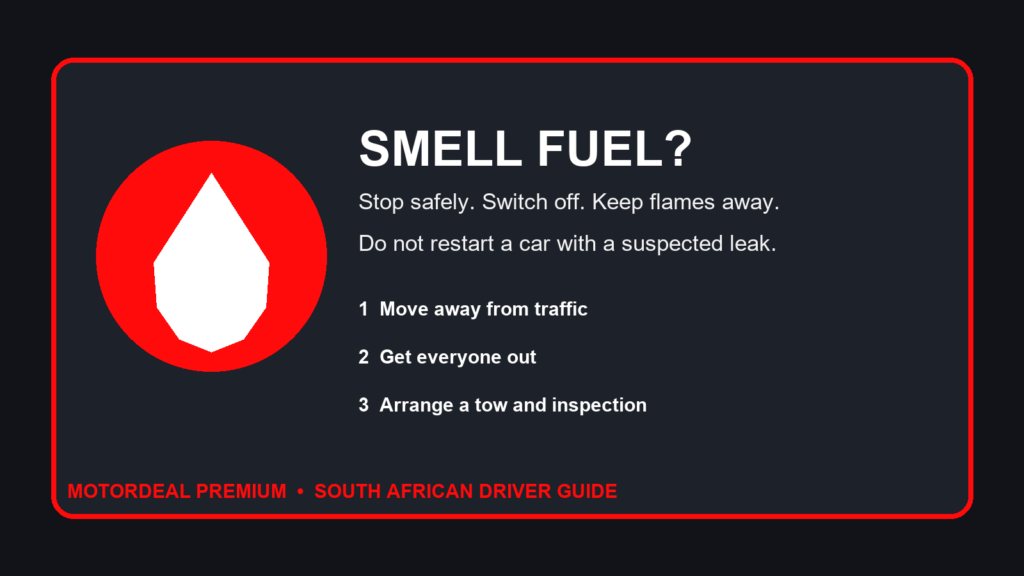
If your car smells strongly of petrol or diesel, treat it as a possible fuel leak: move out of traffic, switch off the engine, keep cigarettes and flames away, get everyone out, and arrange professional recovery. Do not restart if you can see liquid fuel, the smell is strong, or it returns after refuelling.
Information checked: 13 November 2026.
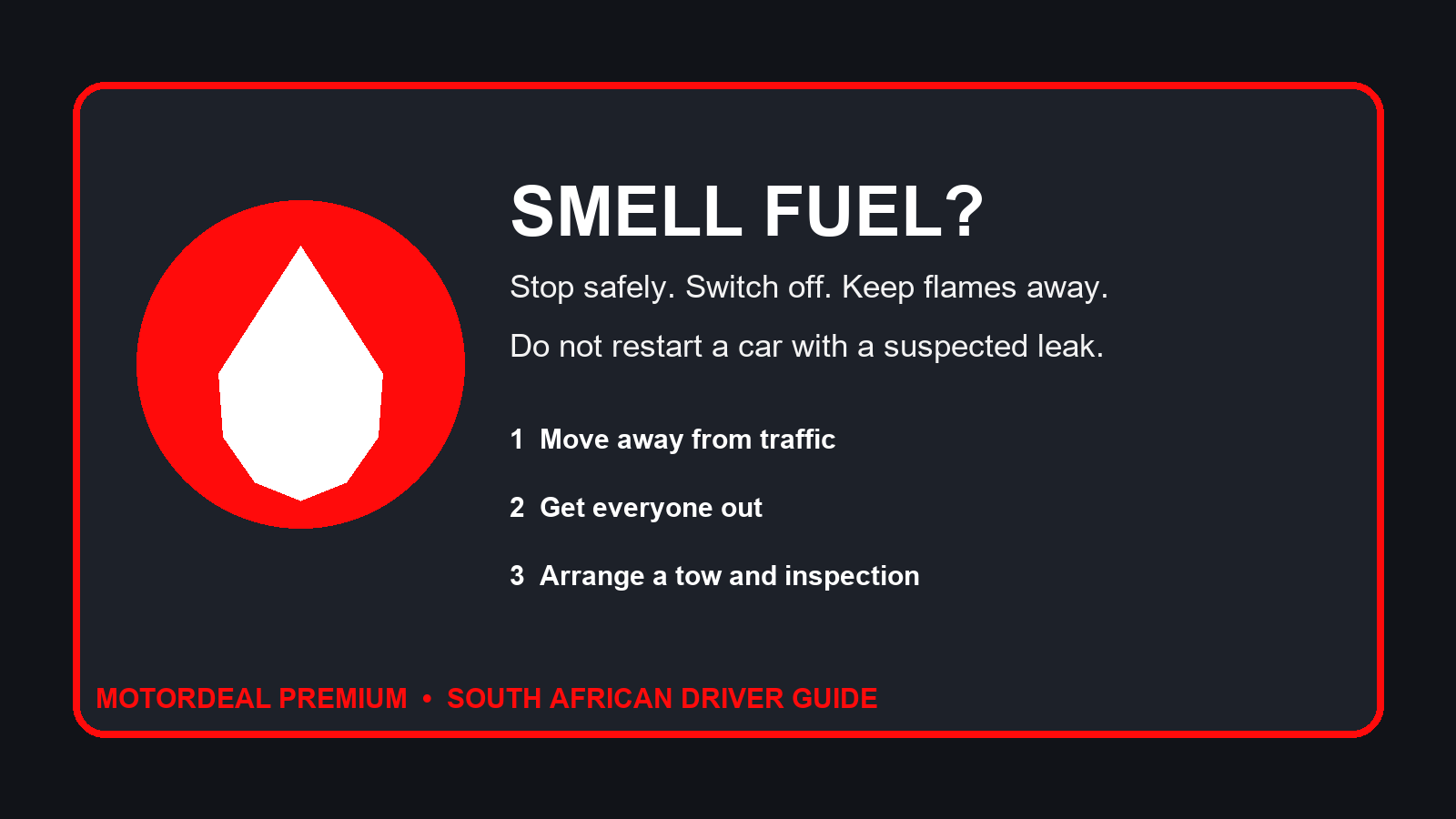
What to do immediately
- Stop in the safest practical place. Signal, slow smoothly and move away from traffic. Avoid dry grass because a hot exhaust can ignite vegetation.
- Switch off the engine. Apply the parking brake and take the key or remote.
- Get passengers out. Move everyone away from traffic and, where possible, upwind.
- Remove ignition sources. Do not smoke, vape, light a flame or use jump leads. Petrol vapour is highly flammable.
- Do not crawl underneath. From a safe standing position, look for a wet patch or dripping liquid. Do not touch it.
- Call for recovery. Tell the operator you suspect a fuel leak.
Emergency warning: If there is smoke, fire, spreading fuel or immediate danger, move well away and call emergency services. Do not open a hot engine bay when there are flames; extra air can intensify a fire.
When the smell may be less serious
A brief outside smell after refuelling can come from a small spill or loose cap. Park safely, switch off, check that the cap is correctly fitted and look for visible leakage. If the smell persists, enters the cabin or returns while driving, stop using the car until it has been inspected.
Older cars can smell of fuel after a difficult cold start, but a repeated raw-fuel smell is not normal. Modern petrol vehicles use sealed evaporative-emissions systems; damaged hoses, seals, injectors, tanks or filler components can release fuel or vapour.
Common causes a workshop should investigate
- A loose, damaged or incorrect fuel-filler cap.
- Spilt fuel trapped around the filler recess.
- A cracked hose, seal, injector connection or fuel line.
- Damage to the tank, filler neck or underbody after debris impact.
- An evaporative-emissions fault on a petrol vehicle.
- Fuel leaking near a diesel filter or injector return line.
- Incorrect combustion or an excessively rich mixture, especially with rough running or a warning light.
This is diagnostic context, not a DIY repair guide. Fuel systems can remain pressurised after switch-off. Repairs require a qualified technician using the correct model-specific procedure.
Can you drive the car to a workshop?
Not when a leak is suspected. A tow is safer if the odour is strong, liquid is visible, the cabin smells of fuel, occupants feel unwell, or the smell returns after starting. Driving introduces heat, electrical activity and vibration near a potentially flammable leak.
If the only cause was a small forecourt spill, the cap is secure, there is no visible leak and the odour disappears completely in open air, monitor carefully. When uncertain, do not restart.
Petrol fumes and your health
Petrol vapour can cause headache, dizziness and drowsiness, particularly in a confined space. Move into fresh air. Seek medical advice if symptoms persist or exposure was significant. Never siphon fuel by mouth: liquid entering the lungs can cause severe injury.
What to tell the technician
- Whether the smell occurs outside, inside the cabin or under the bonnet.
- Whether it began after refuelling, a pothole impact or recent repairs.
- Whether the car is petrol, diesel or hybrid.
- Any warning lights, rough running, hard starting or unusual consumption.
- Where you saw a wet patch—without touching it.
Buying or selling a car with a fuel smell
Do not accept “they all do that” without a documented diagnosis. Ask for an inspection and repair invoice before concluding a deal. Browse our showroom, discuss finance readiness, or request a trade-in assessment.
Save this guide and follow Motordeal Premium on Instagram at @motordeal_premium and @motordealpremium.
Sources and further reading
- UK Health Security Agency: Petrol—general information.
- UK Health and Safety Executive: Safe use of petrol in garages.
Need vehicle help? Contact Motordeal Premium and follow our Facebook page. Share this guide with a driver who may need it.
Safety note: General owner guidance only. Follow the owner’s manual and use a qualified technician for fuel-system diagnosis or repair.