Driving in Strong Winds: 9 Safety Tips for South Africa
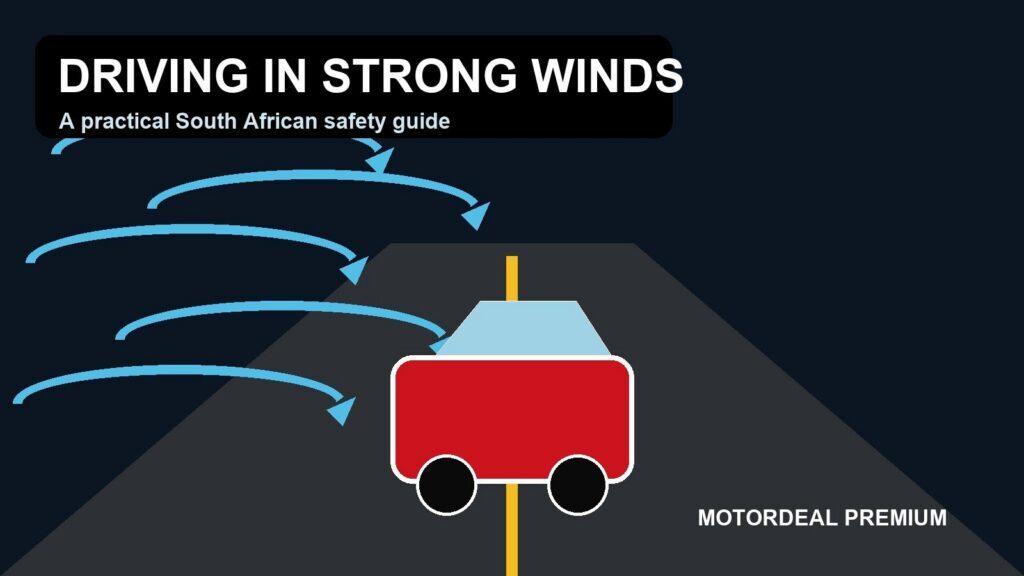
Strong crosswinds can push a vehicle off line with little warning, especially on exposed highways, bridges and open rural roads. Slow down smoothly, increase your following distance, keep both hands on the wheel and expect a sudden change when passing a truck or leaving shelter.
Information checked: 11 November 2026.
Why strong winds are dangerous for drivers
A gust can alter your road position, while branches, dust and debris reduce reaction time. High-sided vehicles, caravans, trailers, motorcycles and lightly loaded vehicles are more exposed. Risk can change abruptly when a truck, cutting, building or trees temporarily shield you.
9 steps for safer driving in strong winds
- Check conditions before departure. Delay non-essential travel if severe warnings apply.
- Reduce speed progressively. Ease off early rather than braking sharply.
- Use both hands and small corrections. Steer smoothly; a large correction can cause a second loss of control.
- Increase following distance. Leave room for debris and swerving traffic.
- Expect turbulence around trucks. A truck may block the crosswind, followed by a gust as you clear it. Pass only when legal and ample space exists.
- Watch exposed sections. Bridges, open veld, mountain gaps and coastal roads can produce stronger gusts.
- Read moving clues. Trees, flags, dust and vehicles ahead can reveal wind direction.
- Secure your load. Close windows and sunroof, and secure roof and trailer loads correctly.
- Stop if control or visibility is doubtful. Use a safe recognised stopping place, away from trees, signs and power lines.
What not to do
- Do not make abrupt steering or braking inputs.
- Do not overtake merely to escape turbulence.
- Do not use cruise control when frequent speed changes are needed.
- Do not enter blowing dust when you cannot see a safe stopping distance.
- Do not repair a vehicle in an exposed live lane.
If your car is suddenly pushed sideways
Stay calm, look where you want to go, ease off the accelerator and correct smoothly. Avoid stamping on the brake or snapping the wheel back. Signal and move to a safe stopping place if instability continues.
If a trailer sways, avoid aggressive steering. Reduce speed smoothly and follow the vehicle and trailer manufacturers’ instructions. Persistent sway needs professional inspection.
Prepare before a windy trip
- Set tyre pressures to the vehicle placard or handbook.
- Check legal tread and visible tyre condition.
- Check wipers, lights and demisters.
- Secure roof boxes, bicycles and luggage to manufacturer instructions.
- Carry enough fuel or charge for delays.
Preparing for a replacement vehicle? Browse our showroom, review finance options, or request a trade-in assessment.
Frequently asked questions
Should I drive faster through a windy area?
No. Higher speed reduces reaction time and makes gust-induced movement harder to manage.
Which vehicles are most affected?
High-sided and lightly loaded vehicles, motorcycles, caravans and trailers are generally more exposed, but any vehicle can be moved by a severe gust.
Where should I stop?
Use a safe parking area away from traffic, trees, power lines and unstable structures. Use an emergency lane only for a genuine emergency.
Sources and further reading
- Arrive Alive: Safe Driving in Strong Winds
- Use your vehicle and towing-equipment manuals for model-specific procedures.
Follow @motordeal_premium and @motordealpremium for more advice.
Need help? Contact Motordeal Premium and follow our Facebook page.
Safety note: This guide does not replace the vehicle handbook, official warnings or professional instruction. Stop or postpone the journey if conditions exceed safe operation.