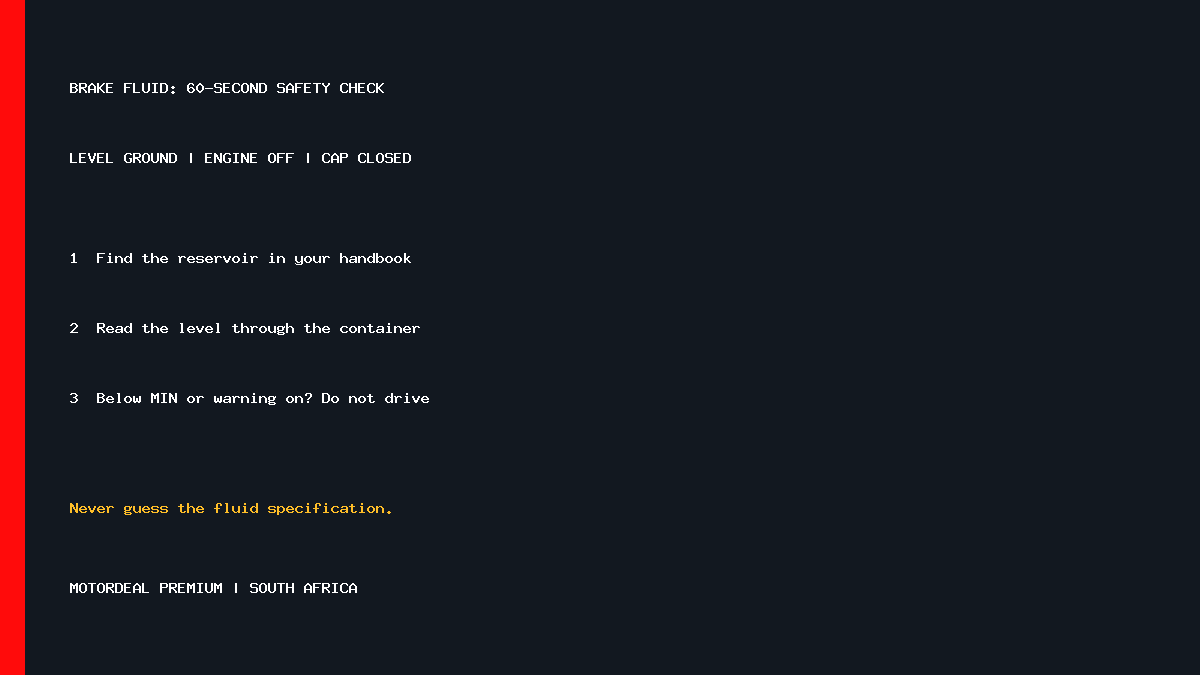
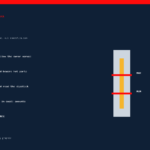
Answer first: Park safely on level ground, switch the engine off, locate the brake-fluid reservoir using your owner manual, and read the level through the translucent container without opening the cap. It should sit between MIN and MAX. If it is below MIN, a red brake warning stays on, the pedal feels soft, or fluid is leaking, stop driving and arrange a qualified inspection.
Original Motordeal Premium safety graphic. Your vehicle handbook remains the authority for reservoir location and fluid specification.
Information checked: 13 October 2026. This is an owner-level visual check, not a substitute for brake diagnosis.
Safety warning before you start
Do not drive if braking has changed, the pedal sinks or feels unusually soft, a red brake-system warning remains on, or you see a leak. Do not bleed brakes, disturb ABS parts or mix fluids as a casual DIY task. Arrange recovery to a competent workshop.
How to check brake fluid safely
Park on firm, level ground, select Park or a gear, apply the parking brake and switch off.
Use the handbook to identify the correct reservoir. Do not confuse it with coolant, washer or power-steering fluid.
Wipe dust from the outside so the markings are visible. Keep the cap closed for a level check.
Read the level through the container. Between MIN and MAX is normally acceptable, subject to the manufacturer instructions.
Note any change. A repeated or sudden drop can indicate a leak or another fault and needs professional inspection.
Should you top it up?
Only consider this if the handbook explicitly permits it, you have the exact approved specification in a newly sealed container, and there are no warning lights, leaks or braking changes. Never choose fluid by colour, mix an unknown product, overfill, or allow dirt or water into the reservoir. For most owners, a low level is a reason to inspect the complete system rather than merely add fluid.
Colour is not a reliable service test
Dark or cloudy fluid deserves attention, but clear-looking fluid may still contain moisture or be overdue for replacement. Replacement intervals are vehicle-specific. Bosch workshop guidance treats fluid replacement and bleeding as trained-professional work.
Book an urgent inspection when
The fluid is below MIN or keeps dropping.
A red brake warning remains illuminated.
The pedal is soft, sinking, unusually hard or needs more travel.
The car pulls, takes longer to stop, or makes grinding noises.
You see wetness near a wheel, hose, master cylinder or under the vehicle.
The wrong fluid may have been added.
A useful South African motoring habit
The Automobile Association of South Africa recommends regular fluid checks and consulting the owner manual when unsure. Include this visual check in your monthly routine and before long trips, alongside tyres, lights, oil and coolant.