Odometer Fraud in South Africa: 9 Checks Before You Buy
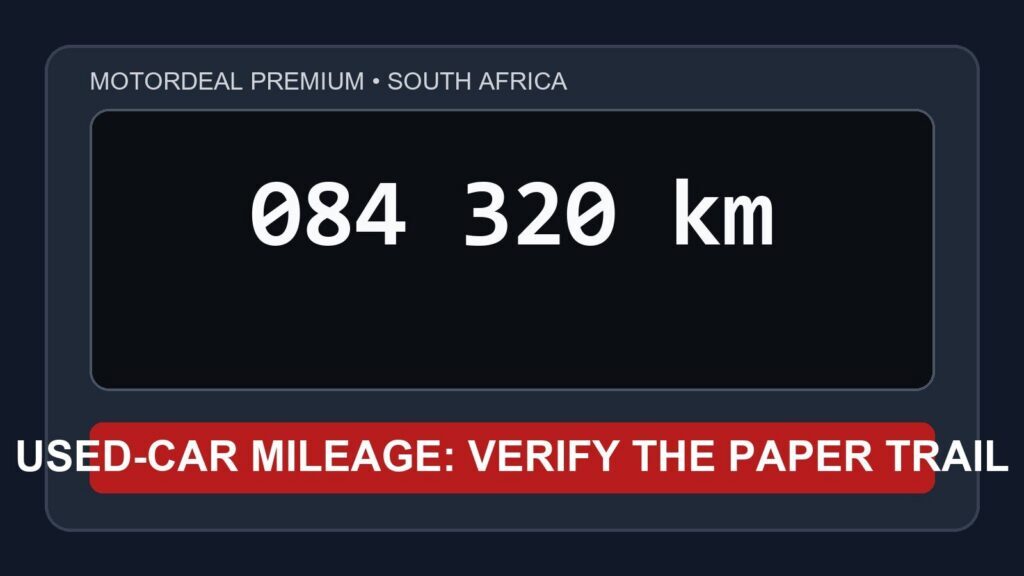
A low odometer reading is not proof of a low-mileage car. Before buying a used vehicle in South Africa, compare the dashboard reading with dated service records, workshop invoices, inspection paperwork, electronic history where available, and physical wear. One mismatch may have an innocent explanation; several are a reason to pause and investigate.
Information checked: 16 November 2026. This is buyer due diligence, not a mechanical inspection or legal opinion.
What is odometer fraud?
Odometer fraud is the deliberate alteration, replacement or misrepresentation of recorded distance to make a vehicle appear less used or more valuable. A cluster replacement is not automatically fraudulent, but the seller should disclose it and provide evidence of the previous reading and work performed.
9 checks that can expose a suspicious mileage claim
1. Build a dated mileage timeline
List the current reading and every mileage entry in date order. Use the service book, dealer printouts, maintenance and tyre invoices, inspection documents, warranty work and fleet records. Kilometres should generally increase. A later document showing fewer kilometres needs a clear, documented explanation.
2. Verify the service book
Contact the named workshop or franchise using contact details found independently. Ask whether it can confirm the VIN, dates and mileages. Privacy rules may limit disclosure, but the business may still confirm whether records are genuine.
3. Match every record to the VIN
Registration numbers can change. Compare the 17-character VIN on the vehicle, licence paperwork, invoices and manufacturer records. Do not proceed if identifiers appear altered or inconsistent.
4. Ask about instrument-cluster work
Request invoices and both the old and new readings if the cluster was repaired or replaced. Damaged trim, mismatched screws, abnormal displays or warning lights that do not briefly illuminate at ignition justify specialist inspection. Do not dismantle the dashboard yourself because airbags and sensitive electronics may be nearby.
5. Compare wear with claimed kilometres
Heavy wear on the driver seat, steering wheel, pedals, gear selector and buttons may conflict with an unusually low reading. Wear is a clue, not proof: highway kilometres can leave less cabin wear than short delivery work.
6. Check tyres and consumables
Read tyre date codes and compare brands and tread wear. New tyres on a low-mileage car are not automatically suspicious, but ask why they were replaced. A qualified inspector can assess brake, suspension and stone-chip wear in context.
7. Request model-appropriate electronic checks
Some vehicles store distance or operating data in more than one control module. A marque specialist may compare values, service counters or fault history. Availability differs by model, and a generic scan tool cannot prove authenticity. Never alter modules merely to make readings match.
8. Ask for ownership and usage context
A five-year-old low-mileage car may be genuine, but the explanation should fit the evidence. Ask whether it was a second car, company vehicle, rental, ride-hailing vehicle or stored vehicle, then compare the answer with the service pattern and condition.
9. Put mileage promises in writing
Save the advert, messages, offer to purchase, invoice and disclosure documents. Ensure the reading and claims such as full service history appear in writing. The Consumer Protection Act promotes accurate consumer information and prohibits unfair marketing practices, but remedies depend on the facts and transaction type. Private and dealer sales can differ, so seek legal advice for a dispute.
Red flags that justify walking away
- The seller refuses to provide the VIN before inspection.
- Records show mileage going backwards.
- A replacement cluster has no invoice or previous reading.
- The seller pressures you to pay before independent inspection.
- The advert, paperwork and explanation give different mileages.
- A workshop cannot verify the stamps or invoices.
What to do if the mileage looks wrong
- Do not accuse anyone on a hunch. Record the discrepancy and request evidence.
- Pause payment or delivery.
- Book an independent inspection with a qualified workshop or marque specialist.
- Keep evidence: adverts, screenshots, reports, invoices and messages.
- If already purchased, act promptly. Write to the supplier with the facts and requested remedy. A consumer body, ombud, attorney or the National Consumer Commission may help with next steps.
The Automobile Association advises used-car buyers to do their homework and check service history. Its used-car buying guidance is useful but does not replace a model-specific inspection.
A safer way to buy
Buy the condition, history and documented identity, not only the dashboard number. Browse the Motordeal Premium showroom, review finance options, or request a trade-in assessment.
For South African motoring guidance, follow @motordeal_premium and @motordealpremium. Share your most useful mileage check on the Motordeal Premium Facebook page.
Sources and further reading
- South African Government: Consumer Protection Act
- AA South Africa: used-car buying guidance
- National Consumer Commission: consumer-rights rulings
Need help viewing a vehicle? Contact Motordeal Premium, and follow our Instagram and Facebook channels for more owner-focused guides.