Tyre Pressure Warning Light On? What South African Drivers Should Do
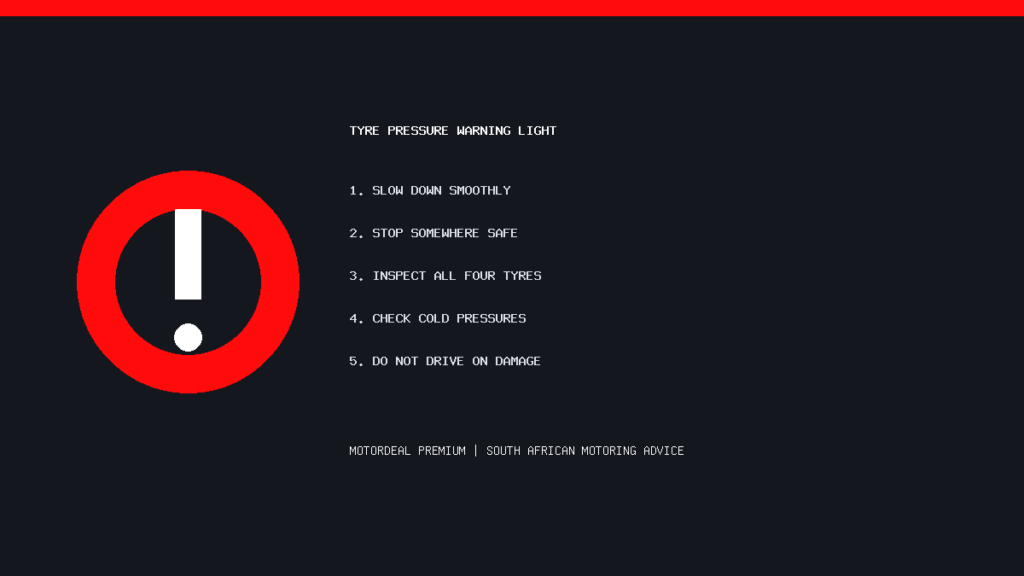
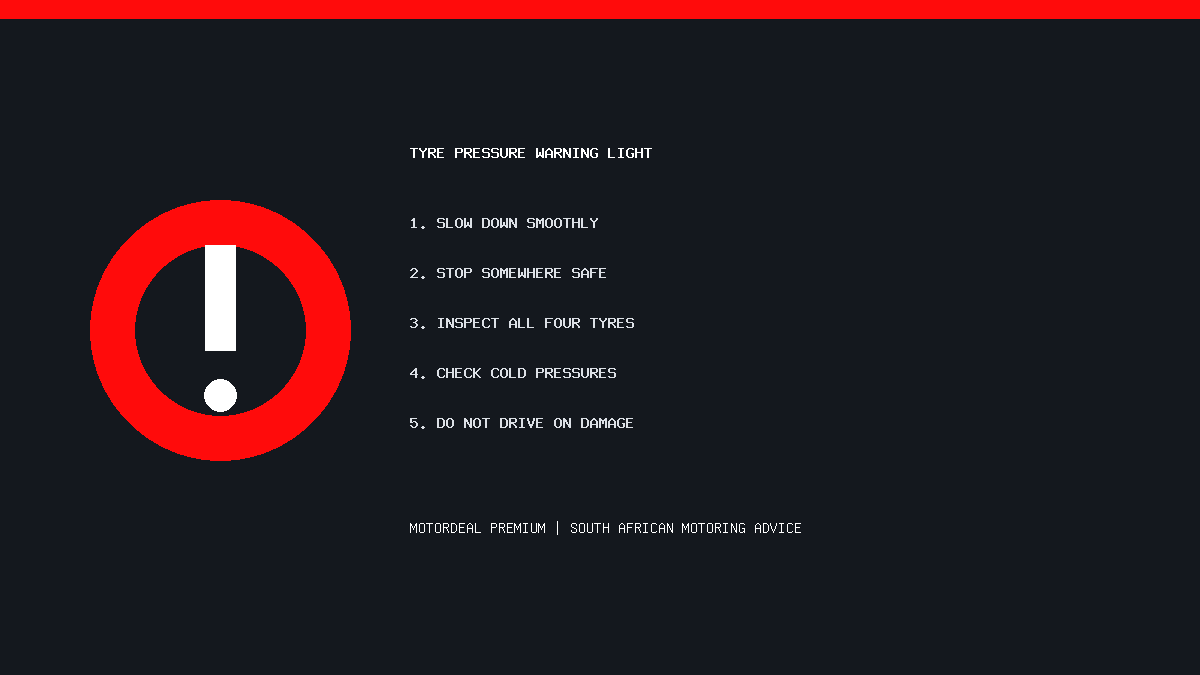
If your tyre-pressure warning light comes on, slow down, avoid sudden steering or braking, and stop somewhere safe to inspect all four tyres. A visibly flat or damaged tyre needs roadside assistance or a safe wheel change—not continued driving. If no tyre looks flat, check and correct the pressures when the tyres are cold, using the vehicle maker’s pressure label or owner’s manual.
Information checked: 20 October 2026. General owner guidance; your vehicle handbook remains authoritative.
What the warning light means
The yellow symbol shaped like a cut-away tyre with an exclamation mark is the tyre-pressure monitoring system (TPMS) warning. A steady light normally means under-inflation. A light that flashes and then stays on can indicate a system fault; behaviour varies by vehicle.
What to do immediately
- Reduce speed smoothly. Avoid abrupt lane changes and hard braking.
- Stop safely. Get fully away from moving traffic.
- Inspect every tyre. Look for a flat tyre, bulge, cut, exposed cord, object in the tread or a wheel sitting unusually low.
- Do not drive on obvious damage. A damaged sidewall or rapidly deflating tyre requires professional assistance.
How to check tyre pressure safely
Warning: Never use the maximum pressure moulded into the tyre sidewall as the normal target. Use the vehicle manufacturer’s specified cold pressures, usually shown inside the driver’s door opening, fuel flap or owner’s manual.
- Check before a journey or after the tyres have cooled.
- Find the specified pressure for your tyre size and load. Front and rear values may differ.
- Press a reliable gauge squarely onto each valve.
- Add or release air in small amounts and recheck all four tyres.
- Refit valve caps. Reset TPMS only if the handbook requires it.
Can you keep driving?
Only travel the shortest sensible distance at a cautious speed after confirming there is no visible damage and correcting the pressure. Stop if the warning returns, steering feels unusual, the car pulls, vibration develops or pressure falls. A tyre can look acceptable while still being dangerously low.
Why the light may return
- Puncture or leaking valve: pressure drops after inflation.
- Temperature change: cooler weather reduces measured pressure, but the tyre must still match its specified cold value.
- Recent wheel work: a sensor may need relearning or correct fitment.
- TPMS fault: flashing behaviour or a warning after verified pressures needs diagnosis.
When to get professional help
Book an inspection if one tyre repeatedly loses pressure, the warning cannot be cleared using the handbook procedure, the wheel struck a pothole, or you see cracking, a bulge, uneven wear or sidewall damage. Internal damage is not always visible.
Browse our quality vehicle showroom or request a trade-in. Follow practical updates on Instagram at @motordeal_premium and @motordealpremium.
Quick takeaway
A TPMS light is a warning to inspect, measure and act—not permission to judge pressure by appearance. Use the car’s specified cold pressures, treat visible damage as a no-drive condition, and get recurring pressure loss checked.
Visit our finance page or contact Motordeal Premium. Follow our Facebook page for ownership updates.
Sources
- NHTSA tyre safety and TPMS guidance
- Michelin South Africa tyre-pressure guidance
- Your vehicle owner’s manual and pressure placard.