Engine Overheating? What to Do Safely in South Africa
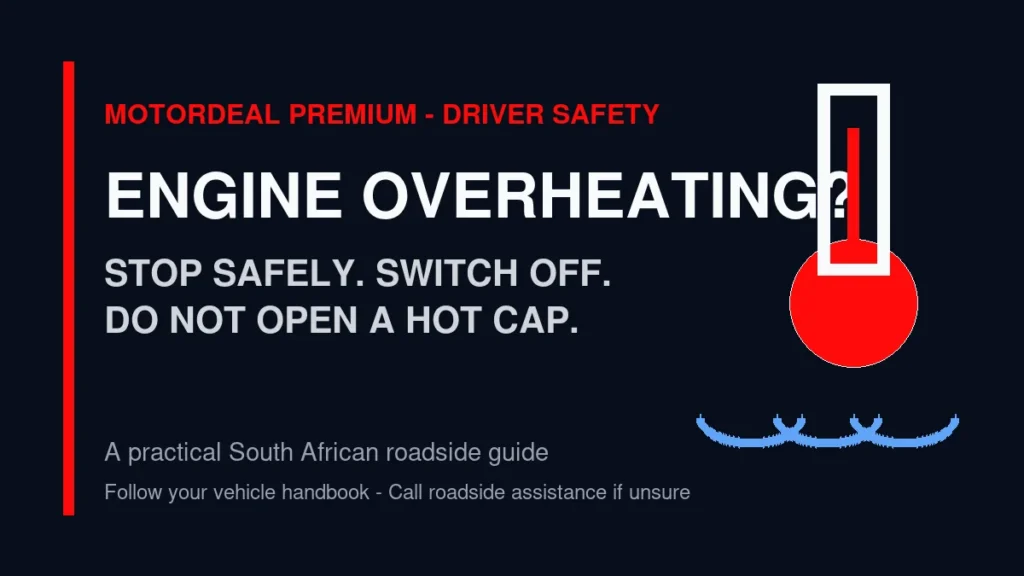
If the temperature warning light comes on, the gauge enters the red zone, steam appears or the engine suddenly loses power, switch off the air conditioner, move out of traffic without hard acceleration, stop safely and switch off the engine. Do not open a hot radiator or coolant-reservoir cap: pressurised coolant can cause severe burns.
Information checked: 19 November 2026. General safety guidance; your vehicle handbook takes priority.
What counts as engine overheating?
Overheating means the engine or coolant has exceeded its safe operating range. Warning signs include a red temperature symbol, a gauge in the hot zone, a high-temperature message, steam, a sweet coolant smell, reduced power or rough running. Some cars have no traditional gauge, so learn the symbols in your handbook before a trip.
What to do when your car overheats
- Take the warning seriously. Cancel cruise control, avoid hard acceleration and switch off the air conditioner.
- Find a safe stopping place. Signal, move away from live traffic and stop on firm, level ground where possible.
- Switch off the engine. Use hazard lights. Travel only the minimum distance needed to escape a more dangerous stopping position.
- Keep clear of steam. Do not lean over the bonnet. Move passengers behind a barrier where conditions allow.
- Wait and assess. Let the system cool fully. Call roadside assistance after a red warning, visible leak, repeated overheating or loss of power.
Never open a hot cooling system
Burn warning: A hot system can remain pressurised after shutdown. Removing the radiator or expansion-tank cap can release boiling coolant and steam. Do not cover the cap with a cloth and crack it open; wait until the engine is fully cold and follow the handbook.
Never pour cold water onto a hot engine. Sudden temperature change can damage components, while liquid near belts or electrical parts creates further risk.
Safe checks after the engine is fully cold
- Coolant level: Check only at the marked translucent reservoir if the handbook permits it.
- Visible leaks: Look for a puddle or wet hose from a safe position. An electric fan can start unexpectedly.
- Warning history: Note the light, gauge position, weather, traffic, air-conditioner use, smells and steam.
- Owner handbook: Confirm the specified coolant and emergency procedure for your exact model.
A low level is evidence of a problem, not permission to keep topping up. Wrong or incompatible coolant can cause damage.
Can you drive after the car cools down?
Do not continue if there is a visible leak, the warning returns, the reservoir is empty, the engine runs badly, steam continues, oil or coolant appears contaminated, or the car has lost power. Arrange recovery. Driving an overheating engine can turn a hose, thermostat or fan fault into major engine damage.
If the warning was brief, the system is fully cold, levels are correct, no leak is visible and the handbook permits continued driving, proceed only cautiously to obtain professional diagnosis. Stop immediately if the temperature rises again.
Common causes a workshop should investigate
- Low coolant caused by a leak.
- A failed thermostat, coolant pump, radiator fan, relay or temperature sensor.
- A blocked or damaged radiator, hose or expansion-tank cap.
- Incorrect coolant mixture or trapped air after service work.
- More serious internal faults such as a failed head gasket.
These symptoms overlap. Proper pressure testing, fault-code checks and model-specific diagnosis matter.
Reduce overheating risk before a South African road trip
- Check coolant only when cold and inspect for fresh stains.
- Confirm the service schedule and correct coolant specification.
- Make sure the warning completes its normal ignition self-check, where applicable.
- Do not obstruct the radiator with unsafe accessories or debris.
- Carry roadside-assistance details and water for people, not as a substitute for specified coolant.
If repeated cooling trouble has you considering a replacement, browse our current showroom, understand the finance process, or request a trade-in assessment.
Engine-overheating FAQ
Should I run the heater when the engine overheats?
Some handbooks suggest maximum cabin heat as a temporary way to draw heat from the engine while moving only far enough to stop safely. It is not a repair. Prioritise a safe stop and follow your model handbook.
Can I add water instead of coolant?
Only follow the emergency instruction for your exact vehicle. Plain water lacks the protection of specified coolant. Never add liquid while the system is hot.
Why does my car overheat in traffic but not on the highway?
A workshop may investigate radiator-fan operation, airflow, coolant circulation and sensors. Do not place hands near an electric fan to test it.
Sources and further reading
- Ford Owner Support: overheating guidance.
- RAC: engine overheating safety and common causes.
- Your vehicle owner handbook for model-specific instructions.
For practical ownership guides, follow us on Instagram at @motordeal_premium and @motordealpremium.
Share this guide and follow the Motordeal Premium Facebook page. For showroom help, contact our team.