Car Air Recirculation Button: When to Use It in South Africa
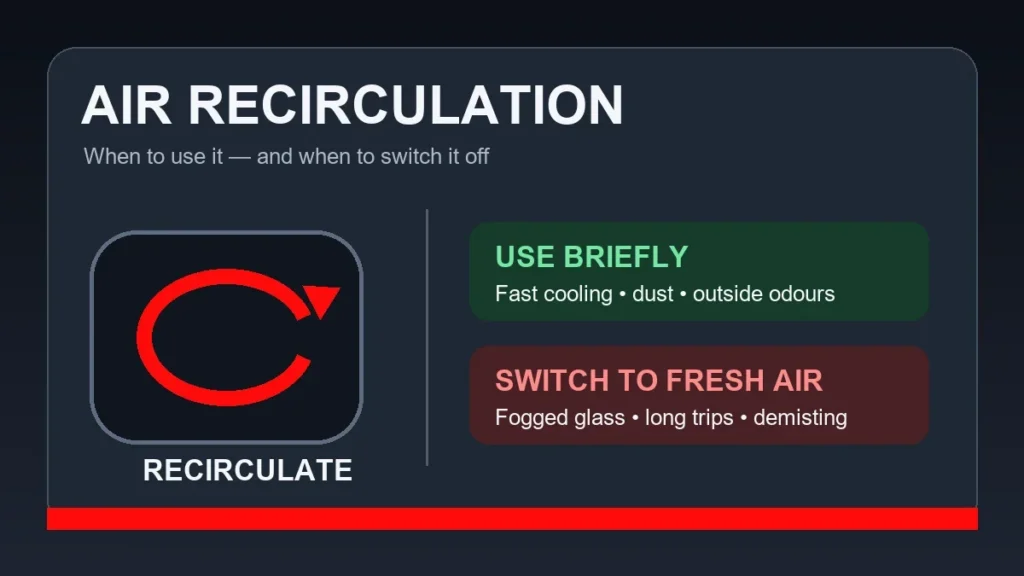
The air-recirculation button reuses air already inside your car instead of continuously drawing in outside air. In South African summer heat, traffic fumes, dusty roads and tunnels, it can make the cabin more comfortable quickly. But it should usually be a temporary setting: prolonged recirculation can contribute to stale air and misted windows.
Information checked: 21 November 2026. Controls differ by model, so your vehicle’s owner’s manual remains the final authority.
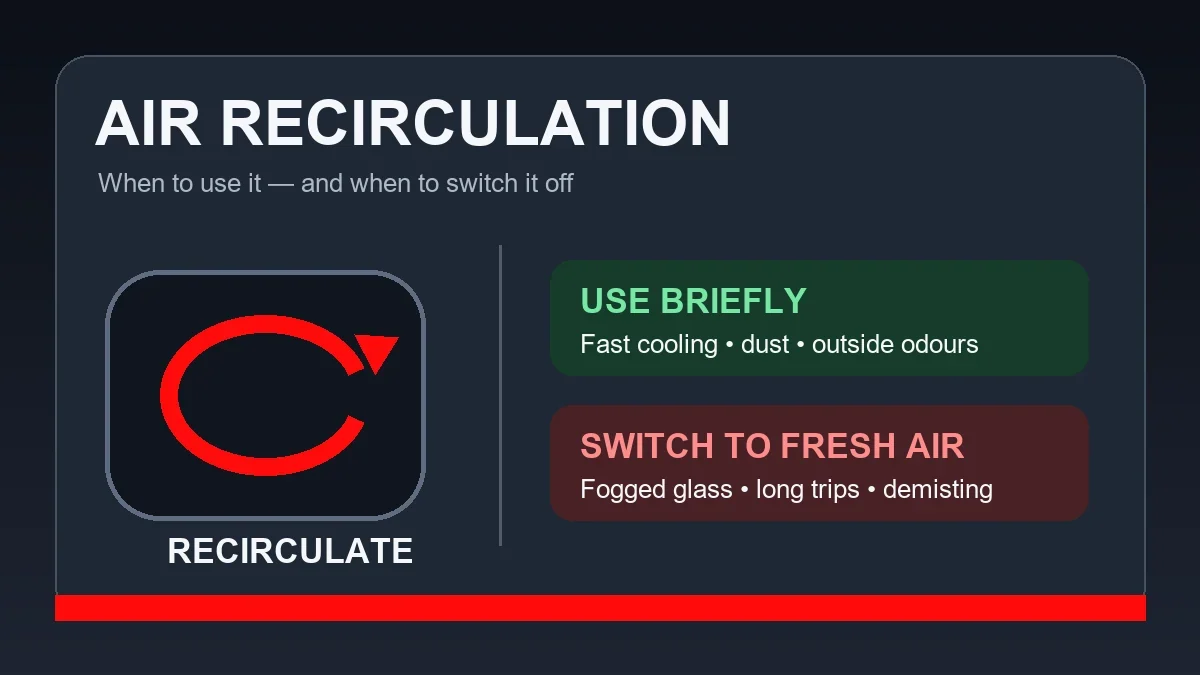
What does the air-recirculation button do?
Look for a dashboard symbol shaped like a car with a curved arrow inside it. When its indicator is on, the ventilation system draws cabin air back through the climate system. With fresh-air mode selected, outside air enters through the vehicle’s intake.
This is different from the A/C button. Air conditioning cools and dehumidifies air; recirculation chooses where the climate system gets that air. Depending on the car, automatic climate control may switch between the two modes without you pressing anything.
Four good times to use recirculation
1. To cool a very hot cabin faster
First open the doors or windows briefly to let trapped hot air escape. Then close them, switch on the A/C and select recirculation. The system can cool air that is already becoming cooler instead of repeatedly pulling in very hot outside air. Once the cabin is comfortable, switch back to fresh air or let the automatic system manage it.
2. When passing smoke, unpleasant odours or heavy exhaust fumes
Recirculation can temporarily reduce the amount of outside air entering through the vents. Use it before entering a smoky area, a short tunnel or slow-moving traffic behind a visibly smoky vehicle. It is not a seal: outside pollutants may still enter, and it does not replace a healthy cabin filter.
3. On a short stretch of dusty road
Close the windows and temporarily select recirculation if a dust cloud is approaching. Switch back when the dusty section has passed. If dust still enters the cabin, inspect the cabin-air filter and door or ventilation seals rather than relying on recirculation indefinitely.
4. When your vehicle automatically selects it
Some modern cars briefly activate recirculation in tunnels, after washer-fluid use or when sensors detect poor outside air. These features vary by model and software version. Check the climate-control section of your manual before changing automatic settings.
When should you switch recirculation off?
When the windscreen or side windows start misting
Visibility comes first. Select the front demist/defrost function, choose fresh air if the car does not do so automatically, turn on the A/C to help remove moisture, and set a useful fan speed. Do not drive until you can see clearly through the windscreen and front side windows.
During normal longer-distance driving
Manufacturer guidance commonly recommends fresh air for routine use and recirculation only when needed. If occupants feel drowsy, the air feels stale or the glass begins to mist, bring in fresh air immediately and stop safely if the driver is tired. Recirculation is never a substitute for a proper rest break.
When heating without the A/C
Warm, moist cabin air can build up and fog the glass when recirculation is left on. Fresh air plus the A/C dehumidifying function, where fitted, is usually the better demisting combination. Follow your model’s instructions because some cars manage these modes automatically.
A simple South African summer routine
- Before driving: If the car has stood in direct sun, open the doors or windows briefly.
- Start cooling: Close the windows, switch on the A/C and use recirculation.
- After the cabin cools: Return to fresh air, or leave the climate system in Auto.
- In dust, smoke or a tunnel: Use recirculation temporarily.
- If glass mists: Select front demist, fresh air and A/C; clear visibility before continuing.
Common mistakes to avoid
- Leaving recirculation on all day: this can make the cabin stale and increase the risk of internal fogging in humid conditions.
- Using it to hide a musty smell: a dirty cabin filter, blocked drain or microbial growth in the evaporator area may need inspection.
- Assuming it blocks all pollution: the cabin is not airtight, and filter effectiveness differs by vehicle and filter type.
- Ignoring automatic mode: some vehicles override your selection to protect visibility or manage cabin conditions.
- Sleeping in a stationary vehicle with the climate system running: do not do this; follow the safety warnings in your owner’s manual.
Shopping for a road-trip-ready vehicle? Browse our quality used-car showroom, or ask about vehicle finance. For practical motoring explainers and new stock, follow @motordeal_premium and @motordealpremium on Instagram.
Quick answers
Does recirculation save fuel?
It may reduce the cooling work required in hot weather because the system is re-cooling cabin air, but the real effect varies by vehicle, temperature and driving conditions. Use it for comfort and correct climate operation, not as a guaranteed fuel-saving trick.
Should recirculation be on when demisting?
Usually no. Fresh air and the A/C dehumidifying function help clear internal mist, and many vehicles select them automatically when front demist is pressed. Follow the exact sequence in your owner’s manual.
Why does the button switch itself off?
Your climate-control system may change modes automatically to manage humidity, visibility or cabin comfort. This can be normal operation rather than a fault.
Sources and further reading
- Hyundai owner’s manual: recirculation when entering a tunnel
- Hyundai Tucson owner’s manual: fresh and recirculated air
- Toyota owner’s manual: automatic air conditioning and defogging
Have a climate-control question or a vehicle to trade? Contact Motordeal Premium or start with our online trade-in page. Join the discussion on the Motordeal Premium Facebook page and share which dashboard control you want us to explain next.