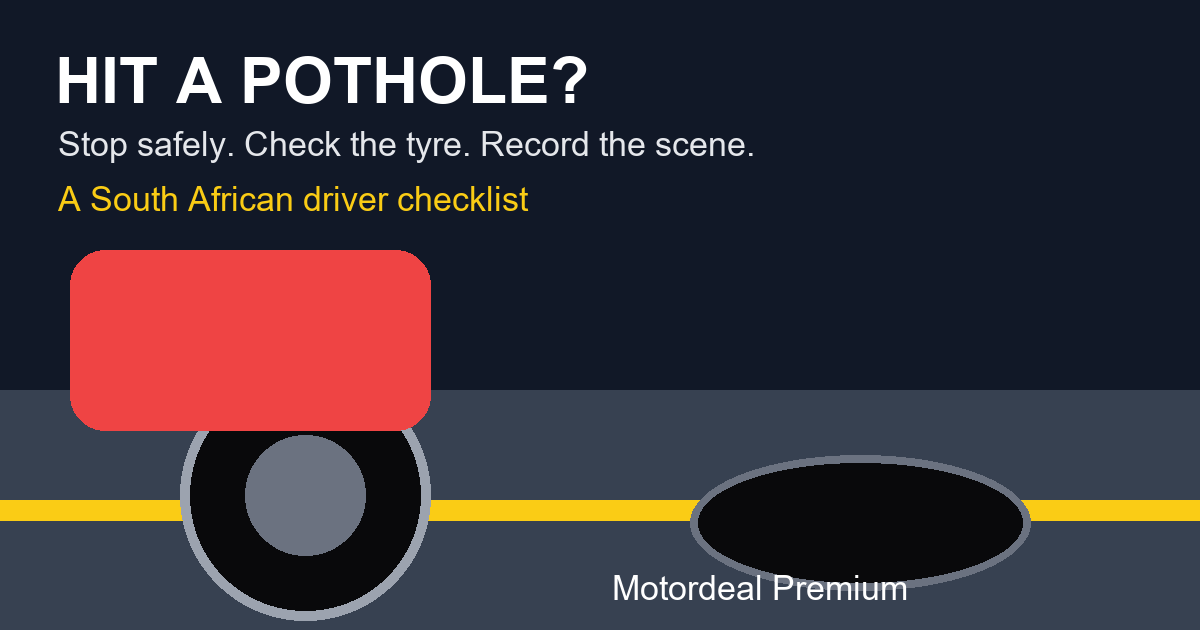
If you hit a pothole, slow down smoothly, stop only where it is safe, and inspect the tyre and wheel before continuing. A visible bulge, cut, rapid pressure loss, steering vibration or a car that pulls to one side can signal damage needing professional attention. Do not keep driving on a tyre that is losing air or has sidewall damage.
Information checked: 9 October 2026.
Original Motordeal Premium safety graphic.
What to do immediately
Keep control. Hold the wheel firmly. Avoid a sudden swerve or hard braking when traffic is close.
Reduce speed progressively. Listen for flapping, scraping or knocking and notice any steering change.
Stop safely. Move fully off the live lane where possible, use hazards and avoid standing near moving traffic.
Check the tyre and rim. Look for cuts, bubbles, pressure loss, a bent rim and fresh impact marks.
Do not crawl onward on a damaged tyre. Fit the spare only where safe and if you know the procedure; otherwise call roadside assistance.
Arrive Alive warns that water can hide potholes and advises drivers who strike one to pull over safely and inspect the sidewall for cuts or bulges. The Automobile Association of South Africa also treats cuts, bulges, distortion and continuing pressure loss as urgent warning signs.
Five signs your car needs inspection
1. The steering wheel vibrates
New vibration can point to wheel, tyre or balance damage. Do not conduct a high-speed test; let a fitment centre or workshop inspect it.
2. The car pulls left or right
An impact can disturb alignment or damage steering and suspension parts. If the car no longer tracks straight, minimise driving.
3. The tyre has a bubble, cut or pressure loss
A sidewall bulge can indicate internal structural damage. It is not cosmetic and should not be repaired with a plug. Replace or professionally assess the tyre before normal driving.
4. The rim is bent or cracked
A damaged rim may leak air, create vibration or fail to seat the tyre correctly. Severe structural damage may require replacement.
5. You hear scraping, clunking or knocking
Stop driving if the noise is severe, the vehicle feels unstable or any fluid is leaking.
Record useful evidence
Only if it is safe, record the exact location, road and direction of travel; wide and close photographs; damage to the wheel, tyre and car; a map pin; witness details; and all inspection reports, quotations, invoices and towing receipts. Never stand in a traffic lane for a photograph.
The AA pothole guidance lists supporting records such as identity and driving-licence documents, registration details, quotations and invoices. Requirements vary by road authority and provider, so confirm the current process. Never claim the same loss twice.
Can you claim for pothole damage?
Possibly, but payment is not automatic. The responsible road authority, evidence, deadlines and merits all matter. Notify your insurer promptly if you may use your policy, and ask about the excess and claims-history effect. For a road-authority claim, identify whether the road is municipal, provincial or national and request the current procedure. Keep copies and reference numbers.
What a workshop should check
Tyre sidewall, tread, inner casing and pressure retention.
Wheel run-out, cracks and deformation.
Wheel alignment and balance.
Control arms, bushes, ball joints, wheel bearing and shock absorber.
Steering components and underbody impact damage.
Safety warning: alignment alone does not prove suspension and steering parts are undamaged. After a severe impact, ask for a physical inspection. Do not weld, heat, hammer or improvise repairs to safety-critical wheel, steering or suspension parts at home.
Reduce future pothole damage
Use the tyre pressure on the vehicle placard or in the manual.
Replace tyres with cuts, bulges or structural damage.
Increase following distance so hazards appear earlier.
Reduce speed in heavy rain and at night.
Avoid sudden swerves; another collision can be worse than the pothole impact.
Keep the spare wheel, jack and wheel tool serviceable.
Buying another car?
Uneven tyre wear, mismatched tyres, rim repairs and steering vibration can reveal neglected alignment or impact damage. Include wheels, tyres and suspension in an independent inspection.